
5 Curry Pastes That Work Better Than Powder for Instant Heat
Ditch the dusty jar for these 5 wet curry pastes that bond instantly with coconut milk fats for immediate, complex heat.


We have all been there. It is a Tuesday evening, you have a can of coconut milk open, and you reach for the generic curry powder sitting in the back of your pantry. You simmer it, hoping for the vibrant, velvety heat you tasted at that street stall in Bangkok, but you end up with a grainy, slightly bitter sauce that tastes of dust and disappointment. The issue is not your cooking technique; it is chemistry.
Dry spice blends require time and heat to bloom, essentially rehydrating to release their essential oils. In a quick coconut curry, you rarely boil long enough to fully wake up those dormant spices. More importantly, capsaicin—the compound responsible for heat—is hydrophobic. It binds to fat. When you introduce a wet curry paste, which is often already emulsified with oil and aromatics, the chili heat is pre-packaged and ready to ride the lipid wave of your coconut milk instantly.
Switching to pastes isn't just about convenience; it is about capturing the volatile esters and fresh oils that powders lose during oxidation. Here are five curry pastes that fundamentally change the game for fast, fat-rich dishes.
Why Thai Red Curry Paste Dominates Coconut Bases
If you only swap one item in your pantry this year, make it the generic yellow powder for a tub of Thai Red Curry Paste. This is the gold standard for immediate flavor release in coconut curries because the ingredients are typically pounded or processed with a wet abrasive force, breaking down cell walls in the chilies and aromatics before they even hit the pan.
The magic lies in the specific pepper profile: dried red chili peppers soaked and rehydrated, then pounded with fresh red spur chilies. The dried chilies provide a deep, raisin-like undertone, while the fresh ones offer a sharp, upfront bite. Because coconut milk is high in saturated fats, specifically lauric acid, it acts as a superb solvent for these capsaicinoids. When you fry a spoonful of red paste in a splash of coconut cream before adding the liquid, the oil separates slightly, carrying the red color and heat into the fat layer of the milk immediately.
Using a powder here often leaves you with "floaters"—undissolved specks of spice that result in a gritty mouthfeel. The paste ensures a homogenous sauce where the heat is distributed evenly. For a quick Tuesday dinner, stir-fry this paste with sliced chicken breast for two minutes, pour in the rest of the can, and you have a velvety sauce in ten minutes flat.
The Scotch Bonnet Factor in Jamaican Wet Blends
Jamaican curry powders are famous for their heavy turmeric and allspice content, but they frequently lack the punch of the islands' signature heat. Pre-made Jamaican curry pastes solve this by incorporating fresh Scotch Bonnet peppers directly into the wet mix.
The Scotch Bonnet is a fleshy, oily chili with a distinct sweet, tropical profile that evaporates the moment the pepper is dried and ground into powder. In a wet paste, that fruity habanero-heat is locked in. When you cook this in coconut milk, the high fat content acts as a buffer for the intense Scoville units, allowing the floral notes of the pepper to shine without scorching your tongue immediately.
I find this paste particularly effective with hearty meats like goat or beef shank. The pectin and sugars in the fresh Scotch Bonnet help thicken the sauce as it simmers, creating a clingy texture that powder simply cannot achieve. You want the oil to bead on top of the curry—that is the visual sign that the capsaicin has successfully migrated into the fat layer of your broth.
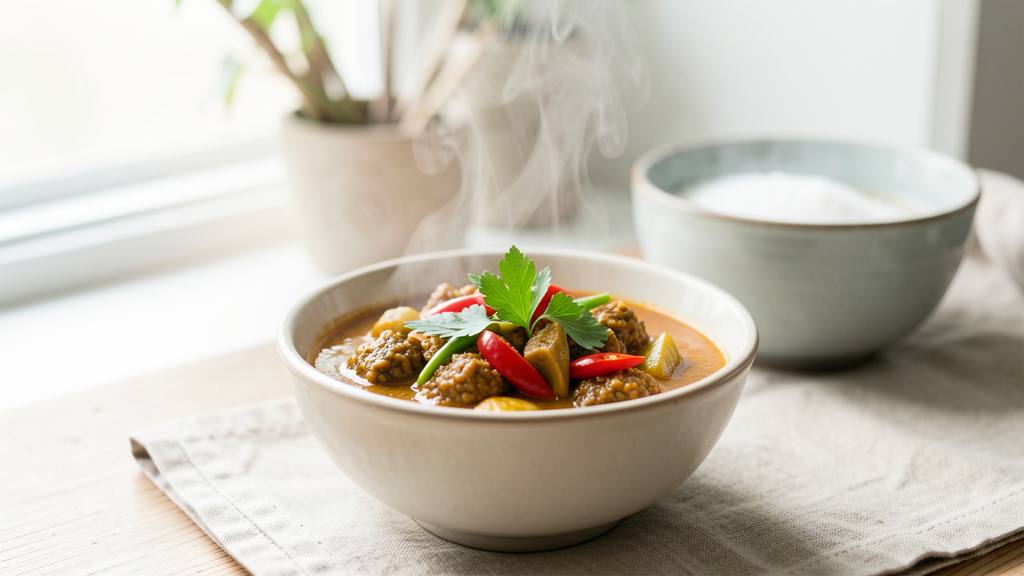
Malaysian Rendang Pastes for Depth Without the Wait
Traditional Rendang is a commitment, often demanding hours of stirring to reduce coconut milk into a dry, caramelized coating. However, for a weeknight "wet" version, a pre-made Rendang paste is a powerhouse cheat. These pastes are dense with roasted ingredients, including galangal, lemongrass, and critically, toasted dried chilies.
The heat here is usually derived from dried bird's eye chilies. Because these chilies are typically dry-fried before being ground into the paste—a technique I discussed in depth regarding The 'Authentic' Oil Myth—their oils are already oxidized and concentrated. This means the moment they hit the hot fat in your wok, they release a smoky, savory depth that would take you twenty minutes of toasting spices to achieve with a raw powder.
Rendang pastes work exceptionally well with beef because the intense, umami-rich spice profile can stand up to the iron in red meat. The high fat content in full-fat coconut milk is necessary here to dissolve the complex spice blend; using lite milk will result in a separated, oily disaster because there isn't enough liquid fat to emulsify the concentrated paste.
South Indian Chettinad Paste for Peppery Complexity
While many associate curry with turmeric, the Chettinad region of Tamil Nadu delivers a dark, fiery flavor profile dominated by black pepper and dried red chilies. A wet Chettinad paste introduces a texture and warmth that powders miss, specifically due to the inclusion of freshly roasted spices ground with soaked coconut.
The pepper choice here is deliberate. Black pepper contains piperine, which hits the tongue differently than capsaicin—it has a lingering warmth rather than a sharp sting. In a paste format, this piperine is mixed with the oil from the coconut and the sesame oil typically used in the paste base. When introduced to a rich coconut curry broth, the fat amplifies this warming sensation without making the dish painfully spicy.
This paste is my secret weapon for vegetable curries. It adheres to the surface of cauliflower, potatoes, and green beans better than a dry dusting. The coarse texture of a traditional Chettinad paste provides a pleasant crunch and intermittent bursts of heat, whereas a powder tends to dissolve away into the liquid, leaving the vegetables tasting bland.
Harissa as a Fusion Shortcut for Smoky Heat
Harissa is traditionally a North African condiment, not a curry base, but in 2026, it is arguably the most underutilized paste for "Red Coconut Curries." Most quality harissas are a blend of roasted Baklouti peppers, Serrano chilies, and caraway seeds.
The Baklouti pepper is moderately spicy but incredibly oily, making it perfect for extraction into coconut fats. Using harissa gives your curry a smoky, sun-dried flavor profile that feels distinct from the sharp, grassy notes of Thai curries. It bridges the gap between a tomato-based stew and a coconut curry.
Since harissa often contains olive oil and preserved lemon, it adds an acidity that cuts through the richness of the coconut milk, balancing the palate without needing vinegar or lime. If you enjoy the funk and depth of fermented pastes, you might want to check out Harissa vs. Gochujang: Which Fermented Paste Belongs in Your Marinade to see how these stack up against fresh pastes.
The Verdict on Emulsification
The reason these pastes outperform powders is not just flavor; it is physics. Powdered spices sit suspended in liquid until they hydrate. Wet pastes are solubilized, often containing their own oils and moisture, allowing them to merge instantly with the lipids in your coconut milk.
When you select your next jar, ignore the "mild" or "hot" labels on generic powders and look for the specific chilies named on the paste. Look for "Bird's Eye" for sharp heat or "Scotch Bonnet" for fruity depth. Your curry will transform from a spiced soup into a complex, cohesive dish where the heat isn't just an ingredient—it is the foundation. For more ideas on bringing the heat, check out our Global Spicy Recipes collection.
The final step to mastering these pastes is not in the cooking, but the storing. Always keep a thin layer of oil over the leftover paste in the jar to prevent the aromatic chili oils from oxidizing, which is the primary reason your homemade powders eventually taste like nothing.
Read next

Harissa vs. Gochujang: Which Fermented Paste Belongs in Your Marinade?
Choosing between North African heat and Korean funk for your summer grill depends entirely on the fat content of your meat and your desired crust texture.
By Camila Rocha · 6 min read
The 'Authentic' Oil Myth: Why Dry-Frying Chilies is Essential for Curry Pastes
Stop drowning your aromatics in oil before they touch heat. Dry-frying chilies unlocks volatile oils that vegetable fat simply cannot extract, creating that restaurant-grade complexity.
By Camila Rocha · 8 min read