
The 'Authentic' Oil Myth: Why Dry-Frying Chilies is Essential for Curry Pastes
Stop drowning your aromatics in oil before they touch heat. Dry-frying chilies unlocks volatile oils that vegetable fat simply cannot extract, creating that restaurant-grade complexity.
I ruined a batch of Panang curry last Tuesday. It wasn't because of expired shrimp paste or a bad cut of beef. It was because I got lazy and skipped the dry-roast. I dumped my dried chilies straight into the blender with garlic and oil, hoping the fat would do the heavy lifting. The result was a sharp, one-dimensional heat that tasted wet rather than rich. It lacked that deep, sticky, caramelized undertone that makes you scrape the plate.
There is a pervasive obsession in 2026 home cooking with "blooming" spices in oil. We see the TikTok chefs dumping Kashmiri powder into sizzling ghee and assume that is the only path to flavor. When it comes to fresh curry pastes, however, oil is often the enemy of the initial extraction. You can’t extract essential oils from a dried pepper if you immediately suffocate it in coconut oil.
Myth: Oil is the Only Efficient Solvent for Aroma
The logic seems sound on paper: capsaicin is fat-soluble, so we should use fat to pull it out. But this assumes the flavor compounds in a dried chili are ready to leave the cell structure immediately. They aren't. Dried peppers are essentially mummified plant matter. Their cell walls are brittle and locked tight. If you throw a dried arbol chili into cold oil and heat it up, you are essentially boiling it in fat. The rehydration happens too slowly, and the exterior seals before the interior has released its soul.
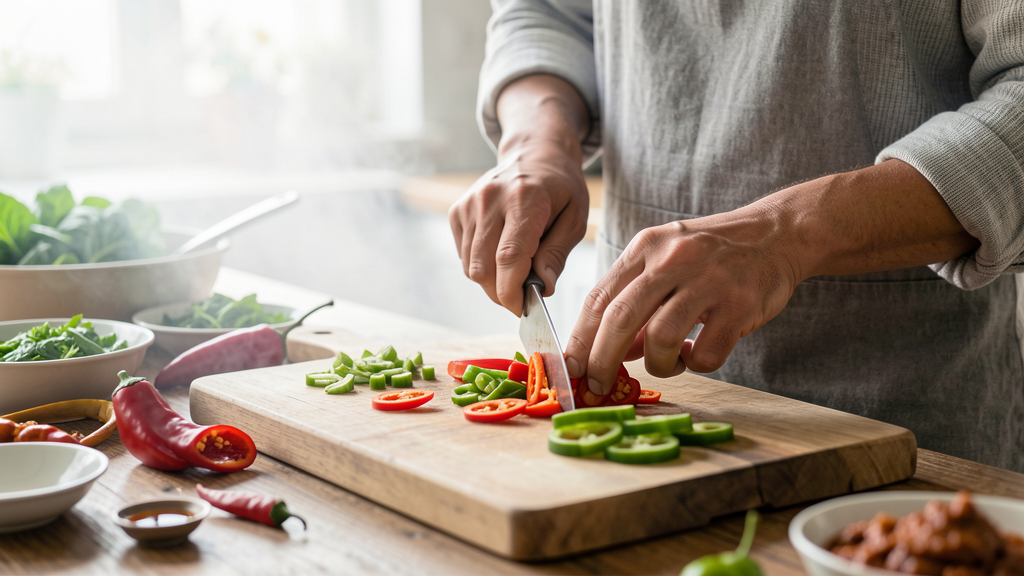
Dry heat is violent and aggressive. It shocks the fibers. By dry-frying your chilies in a hot pan—no oil, just metal—you force the essential oils to the surface through thermal pressure. You smell it instantly. That acrid, nutty perfume is the signal that the terpenes are waking up. This happens long before the oil touches the chili. If you skip this, you rely entirely on the oil to penetrate the skin, which it does poorly. The oil just coats the outside, leaving the flavor trapped inside.
The mistake of adding oil too early creates a barrier. You end up with a paste that tastes like raw garlic and hot vegetable oil rather than toasted chili and aromatics.
Reality: Maillard Reaction Belongs on the Skin, Not Just in the Pan
We talk endlessly about the Maillard reaction in searing steaks, but we ignore it regarding spices. Complex browning creates flavor compounds that simply do not exist in the raw ingredient. You cannot get these flavors by boiling a chili in oil. You need direct, high contact heat.
When I make a paste for 5 Curry Pastes That Work Better Than Powder for Instant Heat, I treat the pan like a dry tumbler. I toss the dried chilies—usually a mix of Guajillo for body and Chile de Árbol for heat—for about 30 to 45 seconds. I am looking for a specific color shift, a deepening from dull brick-red to a mahogany glossiness.
This is not just about "warming up" the spice. It is a chemical transformation. The sugars in the chili skin caramelize. The heat alters the capsaicinoid profile, rounding off the sharp edges of the heat. A raw chili screams; a toasted chili hums. If you add oil before this step, the temperature of the chili never gets high enough to toast. It fries, sure, but it fries in a soggy bath. You want the skin to blister and pop. This textural change is crucial because when you finally pound or blend these toasted chilies, that brittle skin breaks down into microscopic flavor shards that thicken your sauce.
Myth: Fresh Aromatics and Chilies Should Be Cooked Together
This is the "dump-and-blend" error. You see it in recipes that call for a "one-pot curry paste" where onions, garlic, ginger, and dried chilies are sautéed in oil together from minute one. It is a shortcut that destroys the potential of your dish.
Different ingredients have different moisture contents and vulnerability points. Garlic burns at a lower temperature than a dried chili can handle. A dried chili needs 30 seconds of screaming hot dry heat; garlic needs gentle sweating in oil. If you do them together, you either burn the garlic waiting for the chili to toast, or you steam the chili in the moisture released by the onions.
You must sequence your flavors. The dried chilies demand their solo moment in the dry pan. Only after they are toasted and cooled do they meet the wet aromatics. By the time you introduce your fat—whether it is lard, coconut cream, or vegetable oil—the flavor compounds of the chili are already volatile and sitting on the surface of the skin, ready to dissolve into the fat.
This separation is critical. I have found that when I dry-fry chilies first, I need significantly less oil later in the cooking process. The chilies have essentially expressed their own oil. When I eventually add the coconut milk to a Thai curry, the fat in the milk grabs the surface oils of the toasted chili instantly. It is a cleaner integration. You get a velvety texture without the heavy mouthfeel of an oil-heavy curry.
Why the Pepper Choice Dictates the Fat Content
We cannot ignore the specific interaction between the pepper variety and the final dish's fat profile. This is where most "authentic" recipes fail the home cook—they prescribe a chili without explaining why it fits that specific fat source.
Consider the difference between using a fresh Thai Bird's Eye chili and a dried Pasilla Negro in a rich, fatty beef curry. The fresh pepper is mostly water and simple volatile compounds. In a high-fat environment, those water-soluble flavors get trapped or boiled off, leaving nothing but raw heat. However, a dried Pasilla has fibrous material and oils that bond with lipids. This is why dry-frying is non-negotiable for dried peppers in fat-heavy dishes. You are prepping the "sponge" to absorb the lipid.
Conversely, if you are making a lighter broth-based soup, you might skip the dry-toasting because you don't want that heavy, roasted flavor overpowering the delicate stock. But for a rich curry, the dry-toast is the bridge between the vegetable matter and the animal fat. It changes the solubility of the spice.
I learned this the hard way while working on Achieving the Numbing Mala Effect in Mapo Tofu at Home. Initially, I bloomed the chili powder in the beef tallow. The flavor was muddy. Once I started dry-toasting the ground Sichuan peppercorns and chili powder before adding the tallow, the numbing sensation popped against the rich fat. The heat separated itself from the grease. It became a distinct texture on the tongue.
The Texture Difference is Visible
Look at a restaurant curry versus a homemade one. The restaurant version often has a slight red oil separation on top, but the sauce underneath is thick and matte. A homemade "oil-first" curry often looks like an emulsion that broke—a greasy, thin liquid with floating bits of garlic.
Dry-frying changes the particle size of the spices when ground. Toasted spices grind into a finer powder because they are brittle. This fine dust absorbs liquid more effectively than coarse, wet spices. When you fry this fine paste in oil later, it forms a roux-like base. It thickens the sauce. If you skip the dry-toast, your chilies remain tough and leathery. They grind into fibrous chunks that refuse to break down, leaving you with a watery sauce and chewy bits of skin.
Don't confuse this with making a masala. We aren't trying to turn the spices into charcoal. This is a quick, aggressive dance in the pan. The moment the chilies plump up slightly and smell toasty, pull them. If they smell acrid and burnt, you have gone too far.
Myth: You Need a High-Smoke-Point Oil to Fry Spices
You do not need expensive avocado oil or grapeseed oil to handle the heat of your chilies. You need the chilies to handle the heat of the pan. If you are relying on the oil's smoke point to protect your spices, you are fighting the wrong battle. The spices should be cooked at a temperature that would burn the oil, which is exactly why you don't put the oil in yet.
Removing the oil from the first step removes the fear of burning. You can turn the heat up to medium-high. You can listen to the chilies pop. You get the visual cues of toasting without the risk of polymerizing your cooking fat. The oil you add later—perhaps a fragrant sesame oil or a rich first-press coconut oil—goes into the pan at a much lower temperature, preserving its fresh, top-note flavors. This dual-temperature approach yields a curry with layers: the deep, roasted base from the dry-fry, and the fresh, bright top notes from the finishing oil.
This technique also opens the door to using stronger fats. If I am making a pork curry, I want to use lard. But lard has a distinct pork flavor that can be overwhelming if it is the only vehicle for the spices. By dry-frying the chilies first, I ensure they taste like chilies, not just "porky chili."
Rethinking the Paste
Next time you reach for the blender, pause. Heat your skillet. Empty the dried chilies into the dry pan. Stand there and watch them transform. Listen to the crackle. Wait for that scent of roasted nuts and sun-dried fruit to hit your nose. Only then do you add the oil to sauté your onions, and only then do you add the toasted chilies to the mix.
It is an extra step. It requires an extra dirty pan. But it is the difference between a curry that merely sustains you and one that transports you. The oil is not the start of the flavor; it is the vehicle that delivers the flavor you have already awakened. Stop drowning your ingredients and start roasting them.
If you are interested in how this dry-heat principle applies to fermented pastes, check out my comparison on Harissa vs. Gochujang: Which Fermented Paste Belongs in Your Marinade?. The chemistry of heat and pepper is consistent, whether you are in Seoul or Sichuan, but the methods must respect the ingredient.
Read next
Engineering the Mala: How to Toast Sichuan Peppercorns for Authentic Mapo Tofu
Stop relying on pre-ground powders and learn how to properly toast and bloom Sichuan peppercorns to create the vibrating, numbing sensation that defines restaurant-quality Mapo Tofu.
By Camila Rocha · 6 min read
5 Curry Pastes That Work Better Than Powder for Instant Heat
Ditch the dusty jar for these 5 wet curry pastes that bond instantly with coconut milk fats for immediate, complex heat.
By Camila Rocha · 6 min read