
The Serrano Switch: Will Mexican Heat Ruin a Thai Stir-Fry?
Substituting Mexican serranos for Thai bird's eye chilies is feasible for heat, but the swap alters the dish's aromatic balance by introducing a grassy, vegetal flavor that clashes with authentic herbs.

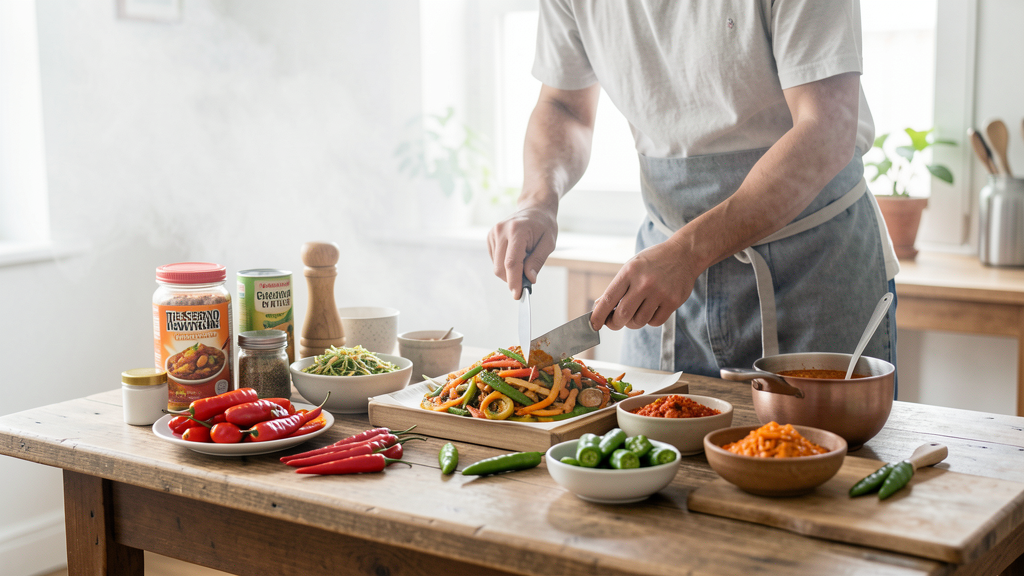
It is 8 PM on a Tuesday. You are halfway through a Pad Krapow Gai (Holy Basil Chicken Stir-Fry). The garlic is sizzling in the wok, the fish sauce has hit the hot oil, and your kitchen smells like a Bangkok street stall. You reach for the aromatics, and then you freeze. The recipe demands five Thai bird's eye chilies (prik kee noo), but your crisper drawer holds only a bag of bright green Mexican serranos. We have all been there.
The immediate instinct is to swap them one-for-one. They are both green, they are both fresh, and they both pack a respectable punch. However, treating these two chilies as interchangeable is a culinary mistake that flattens the complex architecture of a Thai stir-fry. While you can achieve the necessary burn, you will fundamentally alter the aromatic baseline of the dish.
The Scoville Math vs. The Flavor Reality
Let's address the heat first, as that is the primary metric most home cooks consider. On the Scoville Scale, a green serrano typically registers between 10,000 and 23,000 SHU. A Thai bird's eye chili usually ranges from 50,000 to 100,000 SHU. If you strictly follow the heat, you might assume you need two or three serranos to match the fire of one bird's eye.
But a stir-fry is not just about pain; it is about high-frequency aroma. The heat of a serrano feels different in the mouth—it is a sharp, front-of-tongue bite. The bird's eye chili delivers a more lingering, pervasive heat that sits at the back of the throat.
If you use the volume necessary to match the spice level of a Thai chili, you introduce an overwhelming amount of serrano flesh into the dish. This leads to a "wall" of vegetal flavor that competes with the star ingredient: the holy basil. Serranos are incredibly grassy, reminiscent of raw snap beans or bell peppers. Thai chilies have a much thinner flesh and a flavor profile that is aggressively acidic and floral, almost citrusy, without the heavy "green" undertones. By upping the serrano count to match the heat, you turn a herbaceous, spicy stir-fry into a blandly vegetative one.
Why the "Green Bean" Note Clashes with Holy Basil
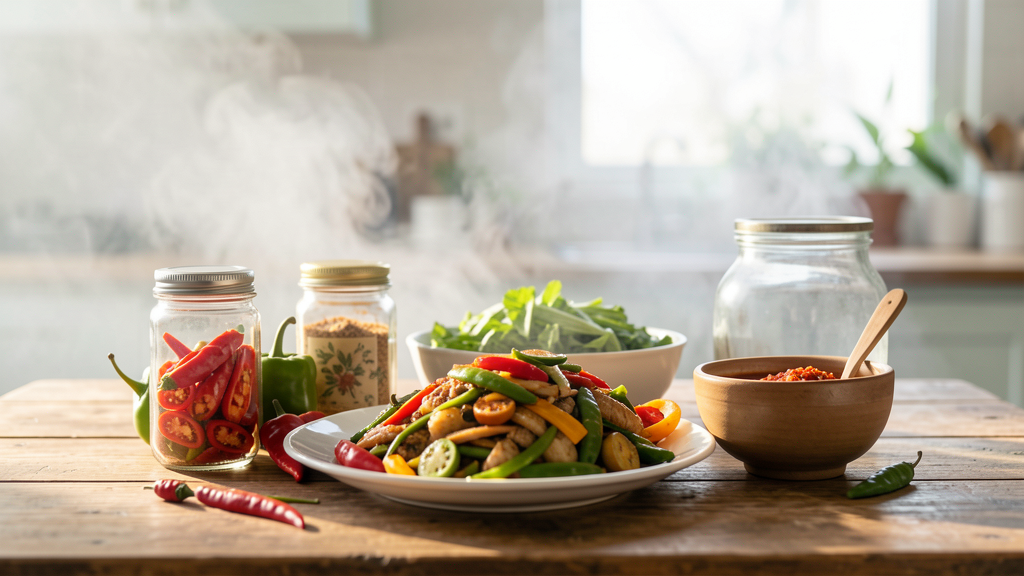
The specific problem with using serranos in a dish like Pad Krapow is the clash of herbal notes. Holy basil (bai krapow) has a distinct peppery, clove-like flavor that is volatile and easily overpowered. It needs a sharp, cutting heat to lift its oils into the steam rising from the wok.
The serrano’s heavy, chlorophyll-rich flavor drags those herbal notes down. Instead of the bright, spicy-anise scent of holy basil, you end up with a dish that smells like steamed green peppers and garlic. It ruins the authenticity because the balance of "hot and herbal" skews entirely toward "vegetable and savory."
If you find yourself in this situation, you must adjust the other aromatics. I often suggest reducing the amount of minced garlic or onion slightly to prevent the vegetable flavors from becoming muddy. Alternatively, you could look into 5 Mild Chilies That Add Body Without Burning Your Throat to understand how different varieties contribute texture without overwhelming the palate, a useful concept when trying to balance a too-grassy serrano.
Flesh Density and Cooking Time in the Wok
Another technical aspect often overlooked is the physical structure of the pepper. A serrano has thick, meaty walls designed to hold up in salsas and pico de gallo. A bird's eye chili is thin-walled, with very little water content and a higher surface area of skin relative to its interior.
When you toss a sliced serrano into a screaming hot wok, it retains its crunch. Even after a minute of stir-frying, it offers a substantial, snappy texture. In a Mexican taco, this is desirable. In a Thai stir-fry, where the chilies are often smashed or sliced thin and meant to almost dissolve into the sauce, the serrano’s texture feels foreign. You get large, chewy chunks of pepper that separate from the sauce, rather than integrating into the coating of the meat.
Furthermore, the thickness of the serrano affects how it releases its capsaicin. The thin skin of the Thai chili releases its heat and oil almost instantly upon contact with the hot fat. The serrano takes longer to break down, meaning the heat hits you later and less evenly. To mitigate this, you should slice your serranos much thinner than you would Thai chilies—julienne them rather than slicing them into rounds—to encourage faster breakdown and better integration.
Adjusting the Sauce Profile
If you are committed to using serranos because that is what you have, you must hack the sauce recipe to compensate for the missing acidity. Thai bird's eye chilies provide a level of brightness that serranos lack.
To bridge the gap, increase the acid component of your stir-fry sauce. If your recipe calls for one tablespoon of lime juice, increase it to a tablespoon and a half, or add a teaspoon of white vinegar to the sauce mixture before adding it to the wok. This artificial sharpness helps mimic the acidic bite of the Thai chili, cutting through the richness of the oil and the savory depth of the fish sauce.
You should also consider the color. Most Thai recipes utilize green bird's eye chilies, but red ones are common for a sweeter, deeper heat. If you are using serranos, you are locked into a specific green flavor profile. There is a fascinating chemical shift as peppers mature, and Why Green Jalapeños Turn Red and How Their Heat Changes explains how the sugars and capsacinoids evolve. While serranos turn red as well, finding a red serrano at the supermarket is rare compared to the green ones, leaving you with a monochromatic, purely grassy flavor profile.
The Verdict: Fusion Over Authenticity
The reality is that substituting serranos for Thai chilies will not "ruin" the meal in terms of edibility—you will still have a spicy, savory dinner. However, it will ruin the authenticity. You are effectively moving the dish from Thai cuisine to a generic "spicy stir-fry" or perhaps a Tex-Mex-Asian fusion.
If you proceed, do so with the understanding that the result will be heavier on vegetal notes and lighter on floral spice. Slice them thin, boost the acid, and perhaps finish the dish with a handful of fresh cilantro to re-introduce some of that fresh, high-topnote aroma that the serrano lacks. Respect the ingredients you have, but understand that you are playing a different song on the same instrument.
Read next

Which Mild Peppers Add the Most Body Without the Heat?
Discover five specific thick-fleshed pepper varieties that deliver substantial texture and culinary volume to your dishes without scorching your palate.
By Mariana Souza · 6 min read
Why Green Jalapeños Turn Red and How Their Heat Changes
Understand the biological ripening of Capsicum annuum to master the flavor shift from grassy green jalapeños to sweet red ones and optimize your spicy cooking.
By Mariana Souza · 7 min read