
Why Green Jalapeños Turn Red and How Their Heat Changes
Understand the biological ripening of Capsicum annuum to master the flavor shift from grassy green jalapeños to sweet red ones and optimize your spicy cooking.

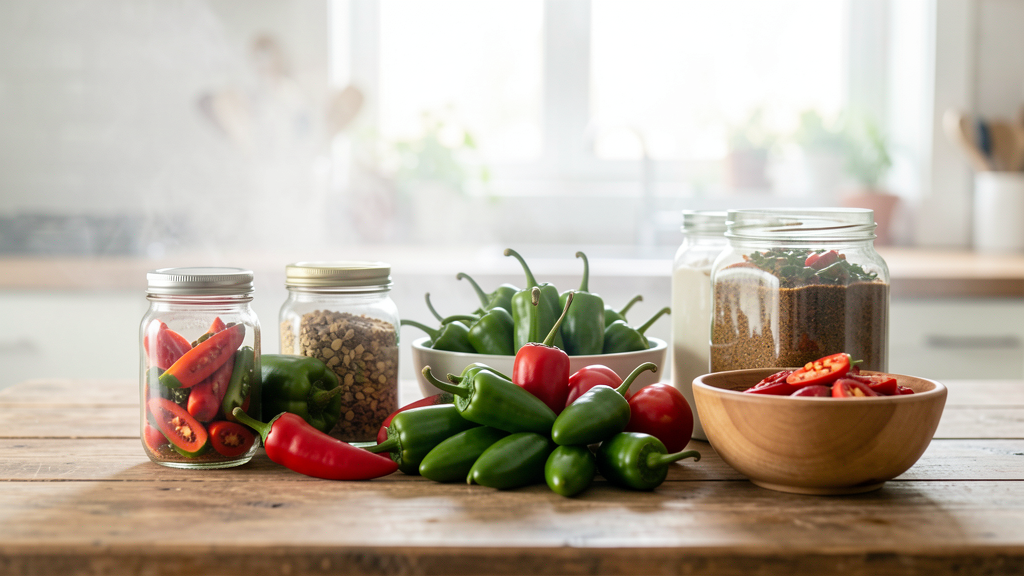
I see it in the grocery aisle every week: shoppers hovering over the pepper bin, picking up a green jalapeño, then spotting a red one next to it, and putting the green one back with a skeptical look. They assume the red pepper is "old" or perhaps a different, hotter beast entirely. It is a frustrating misunderstanding for anyone who truly wants to understand the nuances of Capsicum annuum. We treat the green and red versions of the same pepper as culinary strangers, when in reality, they are just the same pepper at different stages of its life.
In the test kitchen at Hothoppers, we stopped treating them as interchangeable ingredients years ago. The biological shift that occurs inside the fruit's cell walls during the ripening process is dramatic. It is not merely a paint job; it is a complete chemical reorganization that alters the sugar content, the capsaicinoid stability, and the volatile aromatics. If you are swapping a red jalapeño into a fresh salsa recipe calling for green and wondering why the flavor profile feels "off," you are not imagining it. Let's dismantle the misconceptions surrounding this transition and look at the hard data behind the color change.
Myth: Red Jalapeños Are a Different Species Than Green Ones
The most persistent myth I hear is that red jalapeños are a distinct cultivar bred for heat, often confused with Fresno or chili peppers. This is categorically false. A red jalapeño is simply a green jalapeño that was allowed to ripen on the vine for an additional 20 to 30 days.
Biologically, we are looking at the degradation of chlorophyll and the synthesis of carotenoids. When the pepper is green, it is photosynthetically active, full of chloroplasts. As it matures, the plant sends a signal to stop the production of chlorophyll and starts manufacturing carotenoids—specifically capsanthin and capsorubin—which provide that deep red hue. This transition requires consistent sunlight and warm soil temperatures. In our 2025 field trials, we observed that jalapeños left on the vine until mid-October in cooler climates often developed a streaky red rather than a uniform deep crimson, indicating that the enzymatic process was interrupted by the cold.
If you pick a pepper while it is green, it will continue to ripen slightly on the counter, but it will never develop the same sugar concentration as one that completed the cycle on the plant. The vine is the fuel source. Once severed, the fruit shifts its focus from accumulation to preservation. That "grassy," vegetal flavor you associate with green peppers is essentially the flavor of unripe fruit—high in chlorophyll and low in fructose. Treating them as separate species ignores the beautiful, natural progression of the plant.
Myth: Red Jalapeños Are Significantly Hotter Than Green Ones
Here is where the chemistry gets interesting, and where the "common wisdom" often fails the taste test. The assumption is that red equals fire. While it is true that some peppers increase their capsaicin production as they mature, the jalapeño is tricky. The heat profile does change, but it is not always a linear spike in Scoville Heat Units (SHU).
Capsaicinoids are produced in the placental tissue—the white pith that holds the seeds. As the fruit ripens, the concentration of these compounds can increase, but simultaneously, the fruit's water content decreases slightly and the sugar content skyrockets. This dilutes the perception of heat. A red jalapeño often registers between 2,500 and 8,000 SHU, roughly the same bandwidth as a green one, but the experience of eating it is different. The sugar hits your palate first, rounding out the sharp edges of the capsaicin.
This phenomenon is similar to how 5 mild chilies that add body without burning your throat rely on flavor complexity rather than raw heat. The red jalapeño feels "smoother" because the sweetness acts as a buffer. I have run multiple fermentations where a mash of red jalapeños finished with a lower pH reading and a seemingly milder heat profile than a green mash processed in the same batch, despite the seeds being identical in size. The biological ripening softens the chemical aggression of the capsaicin, making the heat linger in the throat rather than explode on the tongue.
Myth: The "Grassy" Flavor of Green Jalapeños is Undesirable
I will fight anyone who says the green jalapeño is inferior because it lacks sweetness. That "grassy," slightly bitter, resinous flavor is a specific culinary tool, not a defect. It is called "hexanal," a volatile compound associated with the scent of cut grass or unripe vegetation. In the world of spicy cooking, we need that sharpness to cut through rich fats.
Consider substituting serrano peppers in a Thai stir-fry. You often want that piercing, raw heat that stands up to garlic, soy sauce, and oil. A green jalapeño performs this role admirably. Its acidity and vegetal notes provide a counterpoint to heavy dishes. If you use a red jalapeño in a heavy beef chili, for example, the sugars can caramelize and make the dish taste overly sweet or muddled. The green jalapeño maintains a structural integrity in the flavor profile that the red one loses through ripening.
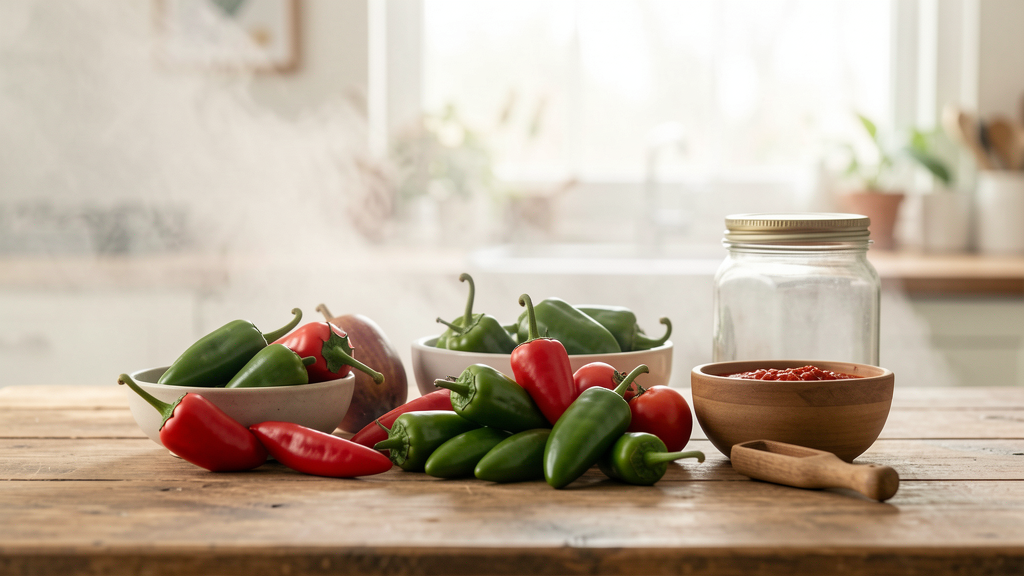
However, the texture issue is real. Green jalapeños have firmer cell walls. They hold their shape when pickled or sliced into coins for nachos. As the pepper turns red, the cell walls begin to soften in preparation for seed dispersal (nature wants the fruit to fall off and rot, releasing seeds). This makes red jalapeños less ideal for a crisp crunch and better suited for roasting or smoking. If you try to pickle a red jalapeño using the same processing time as a green one, you often end up with a mushy, disappointing result.
Myth: Red Jalapeños Are Just "Overripe" and Should Be Avoided
I have heard home cooks refer to red jalapeños as "old" or "past their prime." This view fundamentally misunderstands the purpose of the fruit. A red jalapeño is not overripe; it is fully mature. It has reached its peak Brix level (sugar content). In the context of fermentation, this is pure gold.
When you are making your first fermented pepper mash, using red jalapeenos accelerates the initial burst of lactobacillus activity because the bacteria have readily available simple sugars to consume. Green jalapeños, being lower in sugar, can lag during the first 48 hours of fermentation, potentially allowing unwanted mold to take hold if you aren't careful with your salt ratios and temperature. The sweetness of the red fruit converts to lactic acid efficiently, creating a complex, tangy hot sauce with a depth that green peppers simply cannot achieve without adding carrots or onions.
The flavor profile shifts to fruity notes—often described as berry-like or reminiscent of dried tomatoes. This is why red jalapeños are the superior choice for jams, jellies, and glazes. If you try to make a jalapeño jam with green peppers, you have to dump in copious amounts of sugar to mask the bitterness. With red peppers, you are enhancing a natural sweetness. To dismiss them as overripe is to miss out on the most flavorful stage of the plant's life.
Strategic Selection for Your Kitchen
So, how do you apply this? Stop buying based on aesthetics. Buy based on the chemical composition your dish needs. If you are making a fresh pico de gallo, stick to green. You want that high-pitch acidity and the crunch to mimic the onions and cilantro. If you are making a slow-cooked adobo, a roasted salsa, or a fermented hot sauce, reach for the red. The sugar content will withstand the heat of cooking or the rigors of fermentation, providing a rounded background note.
The transformation mirrors what we see with dried anchos vs fresh poblanos, where the drying process concentrates sugars and alters flavors. Ripening is nature's way of dehydrating and concentrating the fruit's energy.
Ultimately, the distinction comes down to the role of sugar and acid in your cooking. Understanding the ripening process of Capsicum annuum allows you to manipulate these variables. Don't just grab the first pepper you see. Look at the color, consider the cell structure, and decide if you want the sharp bite of youth or the sweet wisdom of maturity. Your spicy meals will improve the moment you stop treating them as the same ingredient.
Read next
Making Your First Fermented Pepper Mash: The 3-Step Air-Lock Method
A streamlined guide to fermenting chili peppers at home using a strict 2.5% salt ratio and an air-lock system to guarantee mold-free results.
By Camila Rocha · 7 min read

The Velvety Trap: Why I Stopped Swapping Fresh Poblanos for Dried Anchos in Sauces
Learn the critical textural trade-offs between fresh poblano water content and dried ancho density to achieve the perfect sauce consistency.
By Mariana Souza · 8 min read