Which Mild Peppers Add the Most Body Without the Heat?
Discover five specific thick-fleshed pepper varieties that deliver substantial texture and culinary volume to your dishes without scorching your palate.
Cooking with chili peppers often devolves into a binary choice: intense flavor that accompanies a punishing burn, or a bland, watery vegetable presence that does little for the dish's architecture. I see this constantly in recipe testing where home cooks want the substance of a pepper—the crunch, the water content, the cellular bulk—without the capsaicin triggering a panic response at the back of the throat. You are looking for volume, a way to turn a thin broth into a hearty stew or a salsa into a chunky relish, without needing a glass of milk nearby.
Finding the right variety requires looking past the Scoville scale and examining the pod's anatomy. We need thick pericarp (the flesh), dense internal membranes, and a robust water-holding capacity. The following five varieties are my top selections for 2026 for adding significant body to recipes while keeping the heat negligible.
The Poblano: A Structural Heavyweight
If there is a workhorse in the mild pepper category, it is the Poblano. While often recognized as the vessel for chiles rellenos, its utility extends far beyond cheese stuffing. The Poblano possesses a uniquely deep, cavity-heavy structure with walls that can reach up to a quarter-inch in thickness. This density means that when you dice a Poblano, you are adding actual vegetable matter, not just flavored water.
The flavor profile is earthy and slightly savory, leaning towards dried raisin or dark berry notes when fully mature. Because of this thickness, they hold up exceptionally well to high-heat cooking methods. You can roast them whole on an open flame or under a broiler to blister the skin. The flesh steams inside its own jacket, softening into a succulent texture that absorbs fats and spices without melting away into nothingness.
One common issue I encounter when roasting these dense peppers is bitterness, which usually stems from over-charring the skin. If you find your roasted Poblanos tasting acrid, you might be making a critical error in the roasting process. For a deep dive into preventing that burnt taste, check out this guide on why roasted peppers turn bitter.
NuMex Big Jim: Breeding for Bulk
For those who treat cooking as a volume game, the NuMex Big Jim is a revelation. Developed at New Mexico State University, this variety holds the Guinness World Record for largest pod (with specimens reaching over 14 inches), but it is the flesh-to-skin ratio that makes it essential for the mild-heat cook.
Unlike thin-skinned peppers that disintegrate in a sauce, the Big Jim maintains its integrity. I use these specifically when making chili bases or large-scale stews where I need the pepper to act as a main vegetable, similar to how one might use bell peppers, but with a far superior, complex green flavor. They generally range from 500 to 2,500 Scoville units, which places them in the very mild category—think a gentle pulse rather than a sting.
The trade-off here is availability. They can be seasonal in some regions. When you find them at the farmer's market in late summer, buy in bulk. They roast and freeze beautifully, retaining that meaty texture even after thawing, making them a staple for winter cooking when you want substance without sweating over the stove.
Giant Marconi: The Italian Frying Alternative
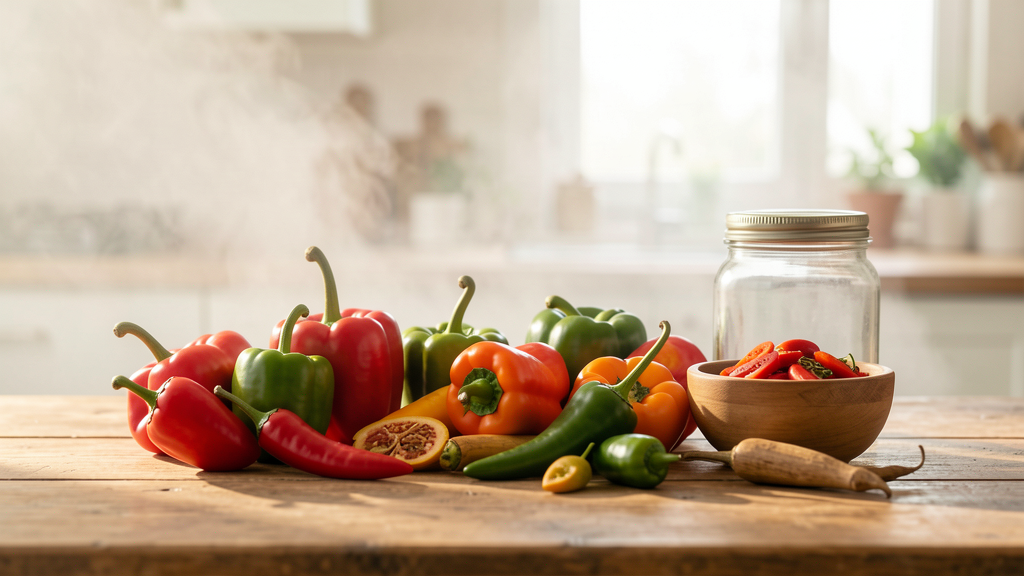
While many reach for Cubanelles for Italian dishes, I prefer the Giant Marconi when "body" is the priority. This Italian hybrid fryer is an elongated, tapering pepper that feels heavy in the hand. It has a crisp, juicy crunch that is reminiscent of a fruit rather than a vegetable.
The Giant Marconi is virtually heatless, often registering near zero Scoville units, making it safe for even the most sensitive palates. However, what sets it apart is its skin. It is thin enough to eat raw without peeling but thick enough to provide a significant snap when bitten. This makes it ideal for sautés. When you toss sliced Giant Marconis in a hot pan with olive oil, they caramelize quickly but do not turn into mush. They retain a toothsome quality that adds necessary contrast to softer ingredients like tomatoes or ground meats.
If you want to preserve this fresh, crunchy flavor for months, extraction is a better method than fermentation for this specific variety. Because the flesh is so watery and the sugar content is high, it can turn mushy in a brine. Instead, try infusing oil with the fresh slices to capture that sweet, peppery essence. This quick method for infusing oil with chili flakes works wonderfully with dried Giant Marconi flakes as well.
Pasilla Bajio: Flavor Density in a Wrinkled Package
The Pasilla Bajio, often confused with the dried Pasilla, is the fresh form known as Chilaca. Visually, it does not look "meaty." It is long, wrinkled, and dark green, almost appearing dried before it is even picked. Do not let the appearance fool you. This pepper packs an incredible amount of flavor density into a compact frame.
The wrinkling indicates a thinner skin, but the flesh underneath is concentrated and rich. It has a smoky, licorice-like undertone that adds a layer of sophistication to a dish that a standard green bell pepper simply cannot provide. While it is not "bulky" in the same way a Poblano is, its structural contribution lies in its stringy fibers. When cooked down, these fibers break down slightly but remain distinct, creating a complex mouthfeel in sauces and moles.
It is a mild pepper, typically sitting around 1,000 Scoville units, but the flavor is so potent that you perceive it as "spicy" due to the aromatic intensity. This is the pepper to choose when you want people to ask, "What is that flavor?" without asking for water.
Maximizing Mild Peppers in Sauces and Mashes
When working with these mild varieties to build body, you must adjust your expectations regarding preservation. If you are fermenting these peppers to make a hot sauce base, you are dealing with vegetables that have a very high water content compared to a habanero or a thai chili.
High water content dilutes the lactic acid bacteria and lowers the salinity if you aren't careful. When I am making a mash from Poblanos or Big Jims, I stick to a strict 3% salt ratio by weight to ensure safety. You cannot rely on the natural acidity of the pepper here; these are sweet, not acidic. An air-lock system is mandatory to prevent mold, which loves the sugar content in these mild peppers. My 3-step air-lock method was specifically designed to handle high-water-content fruits like these.
Furthermore, consider how you break down the cell walls. A rough chop will leave you with floating chunks of skin, which can be unpleasant in a smooth sauce. I recommend a medium roast followed by a blend. The heat collapses the cellular structure, releasing pectin. This natural pectin acts as a thickener, giving your final sauce a velvety body that pure raw peppers cannot achieve.
Ultimately, the goal is to shift the focus of the dish from "heat" to "substance." By selecting peppers like the NuMex Big Jim or Giant Marconi, you are no longer using chili as a spice, but as a main ingredient. This changes the texture profile of your cooking entirely, allowing you to build dishes that feel hearty and substantial, proving that a meal does not need to burn to be bold.
Read next
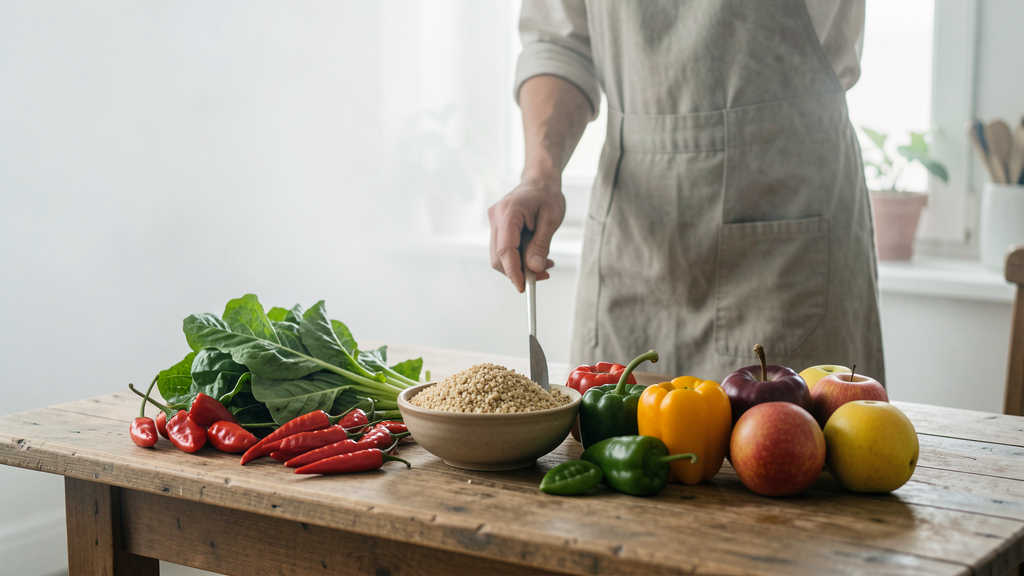
Why Do My Roasted Peppers Turn Bitter in the Oven?
Stop ruining your soups with acrid, ash-tasting peppers by understanding the specific carbonization point of the skin versus the flesh.
By Lucas Oliveira · 7 min read

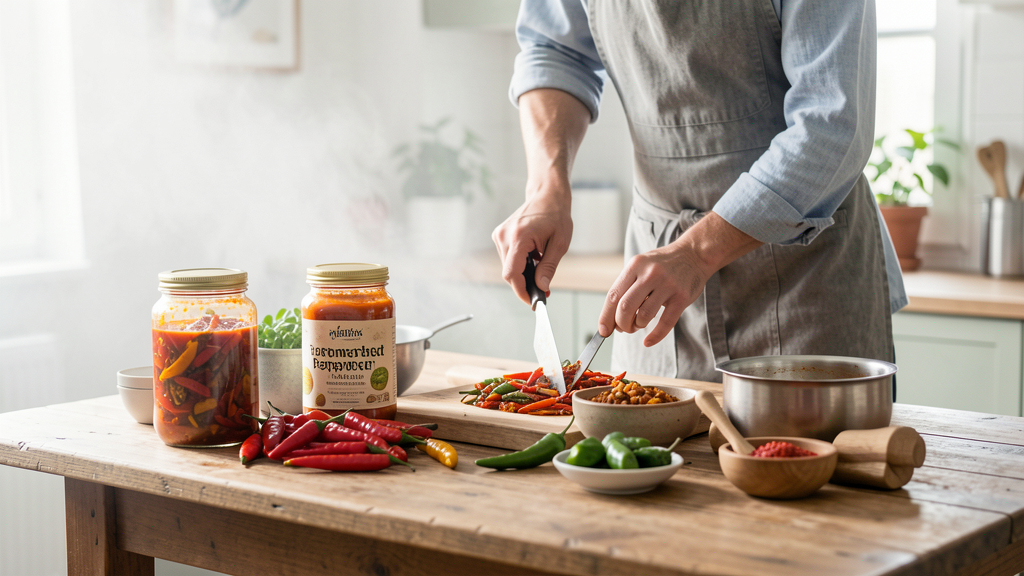
Making Your First Fermented Pepper Mash: The 3-Step Air-Lock Method
A streamlined guide to fermenting chili peppers at home using a strict 2.5% salt ratio and an air-lock system to guarantee mold-free results.
By Camila Rocha · 7 min read