
The Velvety Trap: Why I Stopped Swapping Fresh Poblanos for Dried Anchos in Sauces
Learn the critical textural trade-offs between fresh poblano water content and dried ancho density to achieve the perfect sauce consistency.
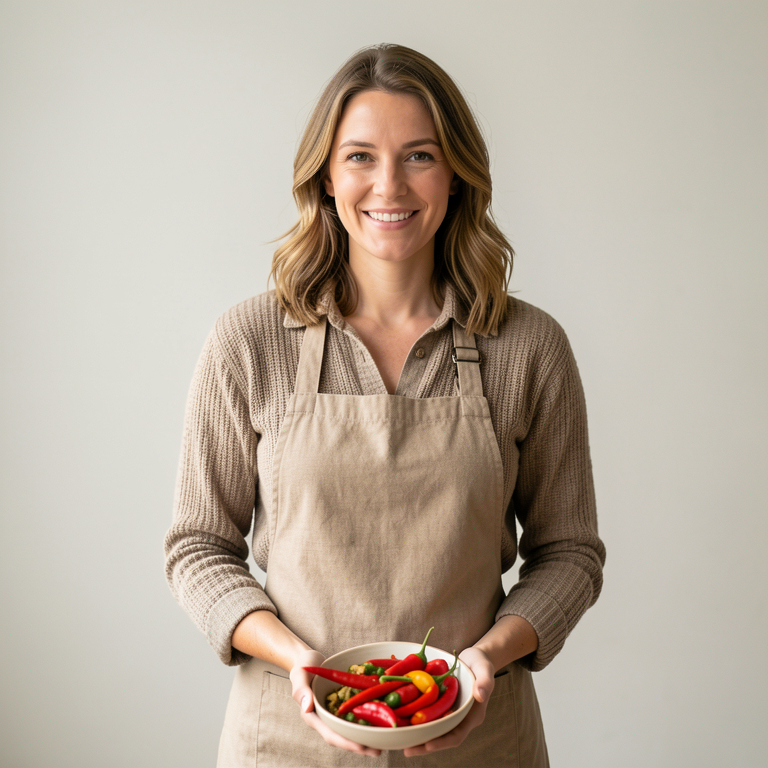
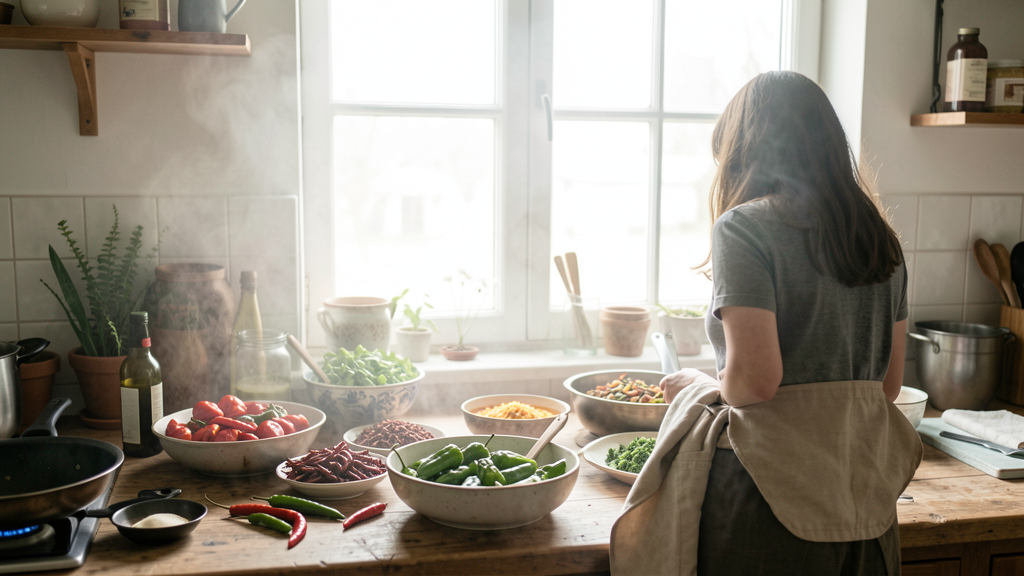
It was February 14, 2026, a Saturday that should have been dedicated to romance, but instead, I found myself in the Hothoppers test kitchen staring at a broken sauce. I was developing a streamlined Oaxacan-inspired Mole for our "Quick Spicy Classics" series. The goal was a sauce that coated the back of a spoon heavily, possessing that luxurious, earthy grip that only dried chilies seem to provide. In a moment of misguided efficiency, I looked at a basket of fresh poblanos and a bag of dried anchos, and decided to treat them as interchangeable variables. I thought the biological relationship would save me. I was wrong.
The resulting sauce was a disaster. It was thin, watery, and tasted violently green rather than deep and chocolaty. I had wasted 12 hours of braising short ribs on a sauce that slid off the meat like water off a duck’s back. This wasn't just a flavor mismatch; it was a structural failure. I realized then that understanding the difference between these two forms of the same pepper isn't just about spice level—it is about hydro-colloids, viscosity, and the specific textural architecture you want on your plate.
The Night the Water Content Betrayed Me
I started the batch with three large, fresh poblano peppers, weighing roughly 600 grams. I roasted them directly over the gas flame to blister the skins, steaming them in a paper bag to loosen the char, and then peeled them. The flesh was slippery, thick, and released a significant amount of liquid just from being sliced. I threw these into the blender with toasted sesame seeds, spices, and a cup of chicken stock. I expected the high pectin content in the peppers to help thicken the emulsion as I reduced it.
What I hadn't accounted for was the sheer volume of water intracellularly trapped within that fresh flesh. Even after roasting, which evaporates some surface moisture, a fresh poblano is over 90% water. As the sauce simmered, the flesh broke down completely. Instead of melting into a creamy suspension, the water separated from the fibrous strands of the pepper. The solids sank to the bottom, and the top remained an oily, watery broth. No amount of reduction could fix it without turning the bitter skins into Leather.
I tried to salvage it by adding a slurry of masa harina, but that just made it taste like grit. The texture was "slimy" rather than "silky." The fresh poblano provided a vegetal crunch and a distinct "green" acidity that fought against the raisins and chocolate I had added. It was a-textural and confusing to eat. I dumped the entire batch. I realized that if I wanted the specific density of a mole, I needed the dehydration process to do the heavy lifting.
Why Rehydration Changes the Structural Integrity
The next morning, I started over. I reached for the dried anchos. Visually, they are shriveled, dark red versions of the fresh poblano, almost unrecognizable as the same botanical specimen. The drying process concentrates the capsaicin but, more importantly for texture, it alters the cell wall structure and concentrates the soluble fibers.
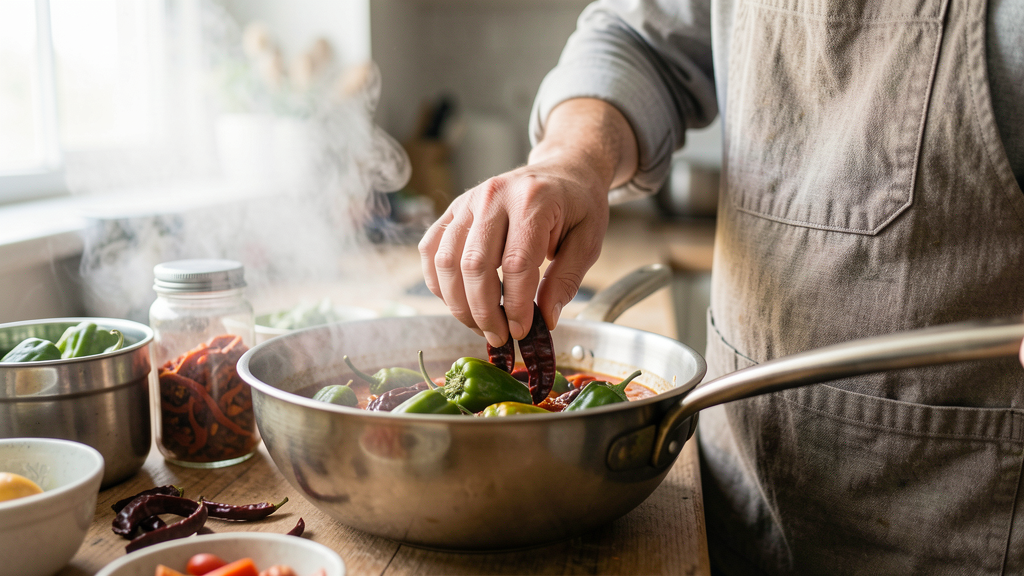
I took 150 grams of dried anchos—which is the rough equivalent of those 600 grams of fresh peppers once water is removed—and toasted them quickly in a dry cast-iron skillet. This step is crucial; it wakes up the oils and adds a nutty depth that fresh peppers simply cannot achieve. Then, instead of throwing them straight into the pot, I covered them with boiling water and let them steep for exactly 25 minutes.
When I pulled them out, the texture was completely different from the fresh roasted peppers. They weren't crunchy; they were pliable, leathery, and dense. I drained the soaking liquid—saving it, as it contained precious collagen and pectin that had leached out of the skins—and blended the chilies with the spices and seeds.
The result was immediately visible in the blender canister. The puree was thick, dark, and moved sluggishly. It had what we call in the industry "high yield." The dried skins, having lost their water volume, acted as a thickening agent themselves. They contributed a fibrous bulk that holds the sauce together, creating that velvety mouthfeel that clings to the palate. The rehydrated ancho didn't just add flavor; it provided the physical body of the sauce.
Calculating Viscosity: Fresh vs. Dried
The core of the problem lies in the physics of the sauce. When you use fresh poblanos, you are adding a vegetable that releases water as it cooks. Unless you are making a 5 Mild Chilies That Add Body Without Burning Your Throat style salsa where you want that fresh, aqueous crunch, the water dilutes your other thickening agents. You are fighting the hydration rather than utilizing it.
Dried anchos, conversely, are rehydrated inside the sauce. They absorb the cooking liquid and release soluble fiber back into the mix. This is the pectin and hemicellulose acting as a hydrocolloid. It turns the liquid into a gel-like matrix.
I measured the viscosity using a simple Bostwick consistometer during my second test. The fresh poblano sauce traveled 24 cm in 30 seconds—very runny. The ancho sauce traveled only 8 cm in the same timeframe. That is a massive difference in how the sauce will coat a taco, a piece of chicken, or a cheese enchilada.
There is also the issue of "skin breakdown." Fresh poblano skins, even when roasted and peeled, retain a toughness that a high-speed blender often misses, leaving behind unpleasant, papery bits in an otherwise smooth sauce. Rehydrated dried skins, however, soften completely. They puree into a homogeneous paste. The grittiness is gone, replaced by a uniform, dense texture.
The Acidity Factor for Storage
As a fermentation specialist, I cannot discuss sauces without addressing the safety implications of water activity. When I work with fresh peppers, I am constantly vigilant about bacterial growth. Fresh peppers have a high water activity (aw), usually around 0.98, which is a playground for bacteria. If you make a sauce with fresh poblanos and intend to keep it in the fridge for more than three days, you must rely on vinegar or acidification to bring the pH down below 4.6 to prevent spoilage.
The problem is that high acid can conflict with the delicate, grassy flavor of fresh poblanos, turning them sour and metallic.
With the dried anchos, the safety profile shifts. The drying process naturally lowers the water activity to about 0.60 or lower. While the sauce we make by rehydrating them introduces water again, the concentration of solids—sugars, fibers, acids—is higher. I often find that dried chili sauces ferment or preserve more predictably because the environment is less "diluted." The osmotic pressure from the concentrated sugars and solids makes it harder for spoilage organisms to take hold immediately.
However, there is a caveat. You must not reuse the soaking water from rehydrating chilies unless you boil it vigorously for at least 10 minutes. Dirt and debris often settle on the wrinkled skins during drying, and mold spores can survive the initial rinse. I always boil the soaking liquid before adding it back to the blender to ensure I am not introducing contaminants that could turn my dense, delicious sauce into a moldy experiment.
When to Break the Rules
I am not saying you should never use fresh poblanos in a cooked sauce. There are specific applications where that watery, vegetal texture is exactly what you need. If you are making a Rajas con Crema, you want those strips of fresh, roasted pepper to retain a bit of bite and structure. You do not want them to dissolve into a puree.
But if your goal is a mole, a barbecue sauce, or a glaze where the pepper should disappear into the background, leaving only its flavor and color behind, the fresh poblano is the wrong tool. It lacks the structural integrity to stand up to long simmering without turning to mush or separating.
I also keep a mental note regarding bitterness. If you roast fresh poblanos too long in pursuit of charring, the flesh can taste bitter and harsh. Dried anchos are often already toasted during the dehydration process, but if you burn them in the skillet, that bitterness becomes concentrated and ruins the batch. I have found that anchos require a gentle, quick toast—just enough to smell the nuts—whereas fresh poblanos need aggressive blistering to remove the skin effectively. The thermal management is completely different.
Understanding these variables saved the Valentine's menu. I served the rehydrated ancho sauce with the short ribs, and it coated the meat in a way that felt substantial and indulgent. The water content was no longer an enemy; it was a controlled variable managed by the dried pepper's thirst.
The Final Verdict on Texture
The distinction ultimately comes down to density versus dilution. Fresh poblanos are diluters; they add volume and water to a dish, brightening it but thinning it out. Dried anchos are densifiers; they remove the water and leave behind the fibers, sugars, and flavor compounds that build the architecture of a sauce.
If you find your sauce is too thin and you are tempted to simmer it for hours to reduce it, you likely used the wrong pepper form. You are essentially trying to evaporate the water you paid for when you bought those fresh peppers. Switching to the dried version saves energy and preserves the fresh vibrant notes of your other ingredients, as they won't be cooked into oblivion while you wait for the sauce to thicken.
Texture is the silent communicator of quality in cooking. A guest might not be able to identify the spices in your mole, but they will instantly recognize if the sauce feels slick, watery, or weak. By respecting the chemical transformation that occurs when a poblano becomes an ancho, you stop fighting the ingredients and start using their natural properties to build a dish that feels substantial and safe to eat. You aren't just cooking with heat; you are cooking with physics.
Read next
Which Mild Peppers Add the Most Body Without the Heat?
Discover five specific thick-fleshed pepper varieties that deliver substantial texture and culinary volume to your dishes without scorching your palate.
By Mariana Souza · 6 min read
Why Do My Roasted Peppers Turn Bitter in the Oven?
Stop ruining your soups with acrid, ash-tasting peppers by understanding the specific carbonization point of the skin versus the flesh.
By Lucas Oliveira · 7 min read