
The Story of My Separated Hot Sauce and How Xanthan Gum Saved It
A detailed troubleshooting narrative on how I fixed a broken emulsion in a homemade mango-habanero sauce using xanthan gum.

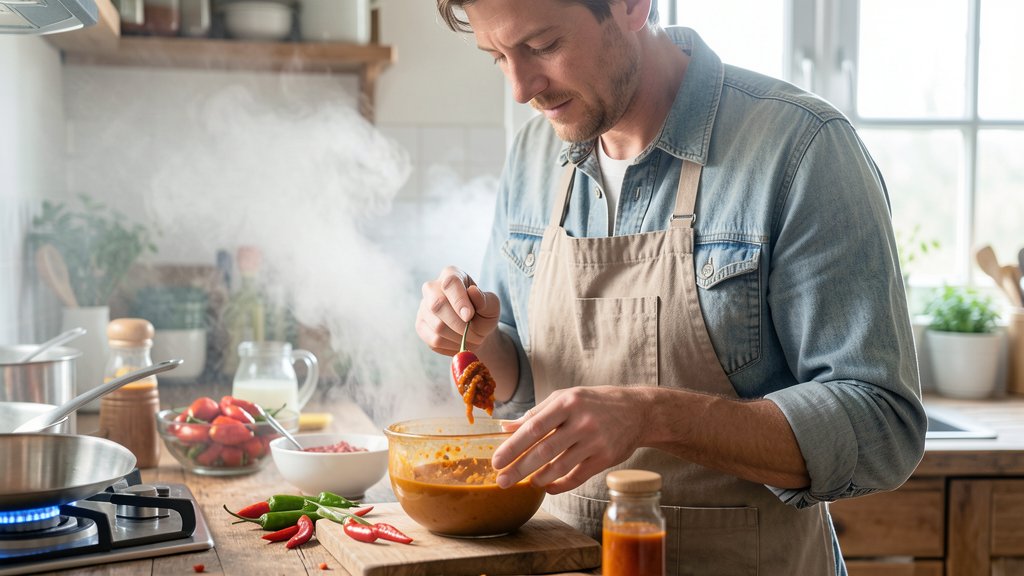
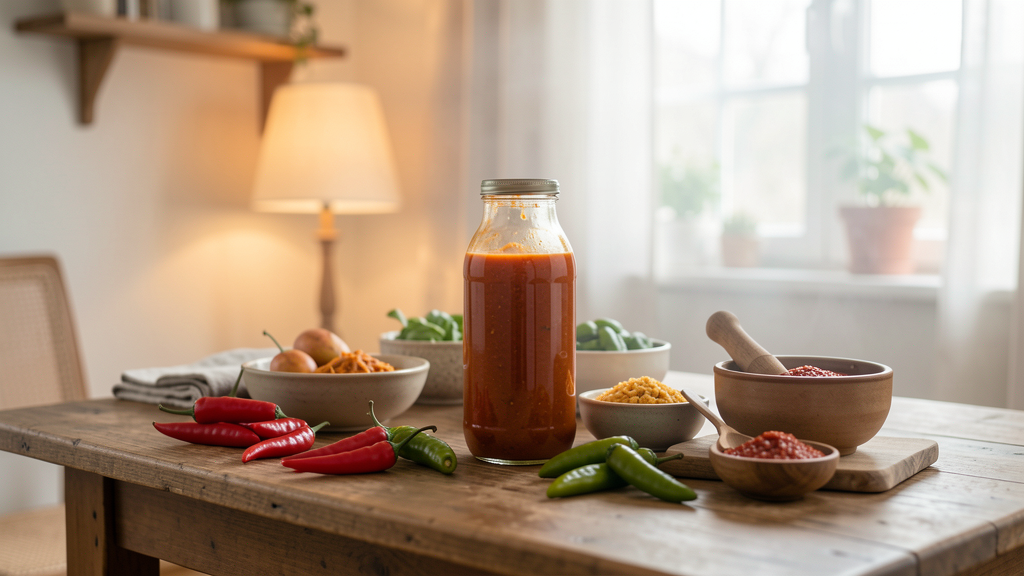
I stared at the mason jar on my counter, disappointed. It was February 14th, 2026, and I had planned to gift a dozen bottles of my "Smoky Mango-Habanero Gold" to friends for Valentine's Day. Instead, I was looking at a culinary crime scene. The sauce, which should have been a cohesive, vibrant orange-red velvet, had split. A thick, sludge-like layer of pepper solids sat at the bottom, topped by a surprisingly large layer of bright red oil that shimmered under the kitchen pendant lights.
It looked like a lava lamp that had lost its will to live. I had tasted the batch three days prior, and the flavor was—a rich sweetness from the mangoes, a deep undertone of smoked garlic, and the fierce, floral heat of the habaneros. But the texture was now completely off. No one wants to pour hot sauce over their tacos and get a burst of plain oil followed by a chunk of pulp. I needed to fix this, and I needed to understand why my usual method of "blend and bottle" had failed so spectacularly.
The Valentine’s Day Batch That Curdled
The recipe itself was simple, or so I thought. I used three pounds of ripe Orange Habaneros, roasted to soften their skin and deepen their flavor. To that, I added four pounds of Ataulfo mangoes, which provide a buttery texture that complements the sharp heat of the peppers. I usually steer clear of water in my sauces, relying instead on the fruit's own moisture and a cup of apple cider vinegar to aid preservation.
The critical error, I realized in hindsight, was the fat. I wanted a silky mouthfeel, so I added a third of a cup of grapeseed oil while the blender was running to help emulsify the solids. Habaneros are naturally rich in volatile oils, specifically in the placenta where the capsaicin lives. When you add a neutral carrier oil to a pepper that is already oil-dense, you are asking a lot of the mixture to hold itself together without a binder. The high fat content of the habanero, combined with the added grapeseed oil, overwhelmed the natural pectin in the mangoes. Gravity did the rest, pulling the heavy solids down and letting the lighter lipids rise to the top.
This wasn't just a cosmetic issue. Why oil separation occurs in chili oil and the quick fix is usually a matter of safety with preservation methods, but here, it was about texture integrity. The separation meant that the heat distribution would be uneven in every bite. The top spoonful would be searingly hot oil, while the bottom would be relatively sweet pulp.
Why Reduction Alone Wasn't Enough
My first instinct was to reduce the sauce further. I poured the entire separated batch back into a heavy-bottomed pot and set it to a simmer. My theory was that I could evaporate enough water to create a thicker matrix that would physically trap the oil droplets. I simmered it for forty-five minutes, stirring constantly to prevent scorching the sugars in the mango.
While the sauce did thicken, it didn't fix the separation. As soon as I poured it back into a jar and let it cool, the oil reappeared on the surface. In fact, reducing it had concentrated the oil even more, making the separation layer thicker than before. The sauce had also changed flavor profile; the bright, fruity notes of the mango had turned into a jammy, caramelized flavor that was good but wasn't the fresh, zesty punch I was aiming for.
Cooking it down wasn't the answer because the fundamental chemistry was wrong. I was trying to fight physics with heat, but I needed chemistry to intervene. I needed an emulsifier that could force the water and oil to coexist permanently.
Enter Xanthan Gum: The Industrial Saviour
I opened my pantry and looked at the small bag of xanthan gum I keep for gluten-free baking. Xanthan gum is a common food additive produced by fermenting sugar with the bacteria Xanthomonas campestris. It acts as a hydrocolloid, meaning it loves water. When it gets wet, it creates a viscous, sticky solution that adds shear-thinning viscosity to liquids. More importantly for my situation, it stabilizes emulsions by preventing oil droplets from coalescing.
I was hesitant. Part of the charm of homemade homemade-hot-sauces is the lack of "industrial" ingredients. I worry often that using additives strips away the rustic soul of the food. However, I had twelve bottles of ruined sauce and a deadline. I decided to run a test with just one cup of the separated sauce.
The Technique to Re-Bind a Broken Sauce
I measured out 1/8 teaspoon of xanthan gum for one cup of separated sauce. The key to using xanthan gum is avoiding the "clumping disaster." If you dump the powder directly into a liquid, it hydrates instantly on the outside, forming a waterproof gel blob around a dry core. You end up with fish eyes in your sauce—a texture worse than the separation.
I whisked the xanthan gum into two tablespoons of neutral oil first, creating a slurry. This disperses the gum particles through the fat before they even touch the water. Then, I poured the cup of separated sauce into the blender. While the blades were running at high speed, I drizzled the oil-xanthan mixture into the vortex.
The transformation happened in seconds. The blender jar, which previously looked like a swirling vortex of distinct red and orange layers, turned into a uniform, glossy, deep orange cream. I poured it into a small ramekin and waited. Two hours later, no oil on top. Twenty-four hours later, still perfect. The viscosity was slightly thicker than the original batch, but it flowed beautifully over a spoon.
Encouraged, I scaled up. I calculated the total volume of my ruined batch—roughly 8 cups—and added a full teaspoon of xanthan gum, dispersed in a quarter cup of oil, using my immersion blender directly in the pot. The entire batch emulsified.
The Trade-Off: Texture vs. Purity
The sauce was saved, but it wasn't exactly the same as it was before. The xanthan gum gave the sauce a specific "slip." It coated the tongue slightly more than the fruit-only version. It muted the aggressive acidity of the vinegar just a hair, not by changing the pH, but by physically coating the taste buds.
This is the trade-off you have to accept when you fix a broken emulsion with stabilizers. You gain consistency and shelf-stability, but you lose a fraction of that "raw" immediacy. However, for a sauce containing high-oil peppers like Habaneros, this actually worked in my favor. Habanero heat is resinous and oily; the xanthan gum helped suspend those capsaicin oils evenly throughout the mango base, ensuring that every single drop delivered the same amount of heat.
I also realized that Do You Really Need White Vinegar for Shelf-Stable Hot Sauce? is a different question than texture. The vinegar kept the pH safe, but the xanthan gum kept the texture edible. They work on different fronts.
The Final Verdict on Stabilizers
I bottled the "Smoky Mango-Habanero Gold" that night. The labels were slapped on, and the gifts were delivered. The feedback was unanimous—people loved the creamy, thick consistency that clung to their fried chicken and burgers. They didn't know they were eating a science experiment rescued by bacteria fermentation byproducts.
Using xanthan gum taught me that comfort food shouldn't be defined by rustic imperfections if those imperfections ruin the eating experience. Sometimes, a heavy hand of science is necessary to preserve the art. If you find yourself with a separated bottle, don't throw it away. A pinch of xanthan gum and a high-speed blend can turn a failure into your new favorite consistency. Just remember to respect the pepper; the higher the fat content of the chili, the more likely you will need a stabilizer to keep the texture honest.
Read next

The Density Problem: Why Your Chili Oil Separates and How to Fix It
Stop watching your spices sink to the bottom of the jar by understanding the physics of density and the simple emulsifier trick that keeps your chili oil perfectly suspended.
By Camila Rocha · 5 min read
Do You Really Need White Vinegar for Shelf-Stable Hot Sauce?
Swapping distilled white vinegar for lime or apple cider vinegar changes more than just flavor—it fundamentally alters the safety margin and shelf life of your hot sauce.
By Camila Rocha · 7 min read