
The Density Problem: Why Your Chili Oil Separates and How to Fix It
Stop watching your spices sink to the bottom of the jar by understanding the physics of density and the simple emulsifier trick that keeps your chili oil perfectly suspended.


There is nothing quite as disheartening as spending a Sunday afternoon gently toasting Sichuan peppercorns and facing a perfect grid of Guajillo peppers, only to wake up the next morning to a jar of clear, yellow oil with a thick sludge of spices at the bottom. It happens to the best of us. In fact, it happened to me three times in October 2025 while I was testing recipes for the Hothoppers winter menu. We assume that because we are cooking with fat, the solids will just float along merrily, suspended in that beautiful red medium. Physics, unfortunately, has other plans.
To fix this, we have to stop treating the symptoms and start treating the mechanics of the jar. The issue is not that you did anything wrong with your heat control; it is that you are fighting a battle of density without the right ammunition.
The Physics of the Jar: Density Mismatches
Oil and solid spices have fundamentally different densities. Most neutral cooking oils, whether grapeseed, canola, or even lighter olive oils, have a specific gravity of roughly 0.92. This means they are lighter than water. Dried peppers, garlic chips, and toasted seeds, on the other hand, are organic solids packed with fiber and cellular structure that are denser than the oil they are floating in.
When you pour that hot oil over your flakes, the heat creates convection currents that keep everything moving. But once the temperature drops, the kinetic energy vanishes. Gravity takes over, and the denser solids sink to the bottom. This is particularly pronounced with dried Capsicum annuum varieties like Arbol or Pequin. Because these peppers have thin walls and low moisture content, they don't trap air bubbles that might help them float. They sink like stones.
If you are using a heavier fat, like duck fat or a robust sesame oil, you might see slightly better suspension, but the separation is inevitable. The oil simply cannot hold the weight of the solids. This is why shaking the jar is a temporary, messy fix that lasts about fifteen seconds before the stratification returns.
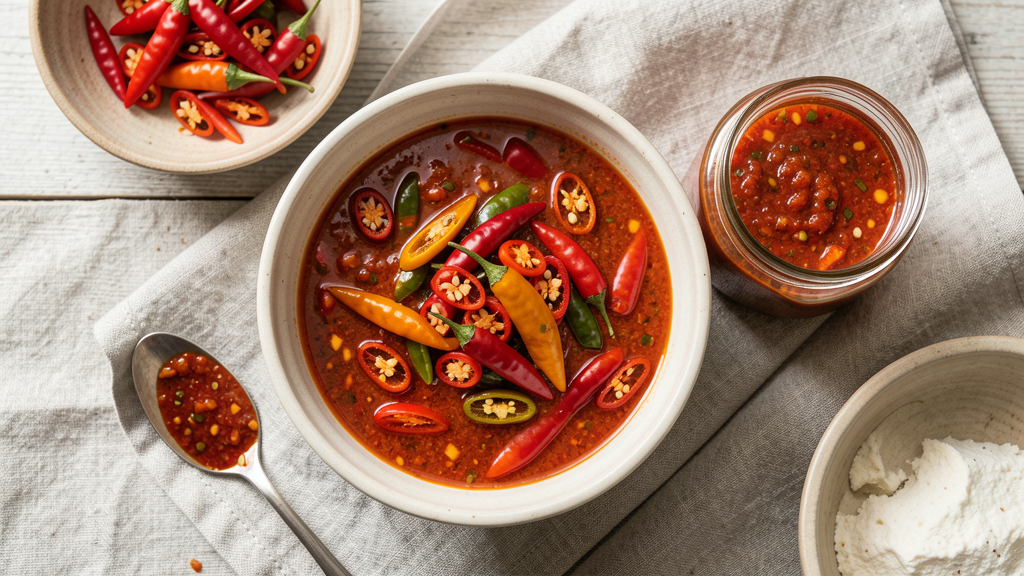
Why Oil and Water Refuse to Mix
Beyond simple weight, we have to talk about solubility. Even dried peppers contain trace amounts of water and hydrophilic (water-loving) compounds trapped within their cellular matrix. Oil is hydrophobic (water-fearing). The capsaicinoids—the chemicals responsible for the heat—are oil-soluble, which is why they migrate so readily into your infusion. However, the physical structure of the pepper flake does not.
Think of the pepper flake like a tiny sponge holding onto the last drops of moisture. The oil coats the outside, but it cannot penetrate to bond with the structure. This creates tension. Without a mediator, the two substances reject each other. The spice clumps together to minimize surface area exposure to the oil, and gravity pulls that clump down. This is similar to the separation issues we see in fermented pepper mash, though the mechanisms there involve biological activity rather than just physics.
To change this dynamic, we need a molecule that can speak both languages—something that bonds with oil on one end and water/solids on the other.
The Emulsifier Solution
The "quick fix" isn't a magic trick; it's chemistry. You need an emulsifier. While many home cooks reach for mayonnaise or mustard for vinaigrettes, those introduce flavors and spoilage risks we do not want in a long-term oil infusion. The gold standard for clear, shelf-stable chili oil is Soy Lecithin, specifically liquid soy lecithin.
Lecithin is a phospholipid. It has a hydrophilic head and a hydrophobic tail. When you introduce it to your chili oil at the correct temperature, it coats the spice particles, effectively wrapping them in a layer that is compatible with the oil. This lowers the surface tension and allows the oil to "grip" the spices, keeping them suspended evenly throughout the liquid.
The choice of pepper matters here too. If you are using very light, airy spices like whole star anise or Ceylon cinnamon sticks, you might not need much help. But if you are using heavy flakes or pastes—like a fermented Gochujang-style base where 7 fruits can cut through the acidity of a Habanero sauce, the added sugar and fruit solids make suspension difficult. In those cases, lecithin is non-negotiable for a consistent texture.
Step-by-Step Stabilization
You do not need to restart your batch if it has already separated. You can salvage that jar right now. Here is the protocol I use in the test kitchen.
First, gently heat your separated oil in a saucepan. You want to reach about 140°F (60°C). Do not boil it; you just want to lower the viscosity of the oil and wake up the lecithin. For every cup of oil, measure out half a teaspoon of liquid soy lecithin. Whisk it vigorously.
If you are making a fresh batch, add the lecithin to the warm oil before you pour it over your spices. This ensures the emulsifier is already distributed in the medium. Once combined, use an immersion blender to pulse the mixture for thirty seconds. This mechanical agitation helps distribute the lecithin and forces it into the nooks and crannies of the spice particles.
Pour it back into your sterilized jar and let it cool. As it cools, you will notice the spices remain where they are, distributed in a haze of red oil rather than a clear layer with a muddy floor.
The Trade-Off of Texture
Adding an emulsifier changes the mouthfeel slightly. Your oil will become slightly more viscous—think of the difference between water and heavy cream. This is actually a benefit when drizzling over pizza or ramen, as the clings better to the food rather than running off the edges.
There is a caveat here. If you use too much lecithin, the oil can take on a slightly chalky feel or a dull appearance. Stick to the ratio. If you find yourself battling a separated hot sauce or oil, remember that fixing the texture often requires sacrificing a bit of that "raw" clarity. You are trading a perfectly translucent look for a perfectly consistent eating experience.
Stabilizing your chili oil transforms it from a random gamble of heat distribution into a reliable condiment. You get the same punch of spice in the first spoonful as you do in the last, without having to violently shake the jar and create a mess. That consistency is what separates a homemade experiment from a pantry staple.
Read next
The Story of My Separated Hot Sauce and How Xanthan Gum Saved It
A detailed troubleshooting narrative on how I fixed a broken emulsion in a homemade mango-habanero sauce using xanthan gum.
By Camila Rocha · 6 min read
Making Your First Fermented Pepper Mash: The 3-Step Air-Lock Method
A streamlined guide to fermenting chili peppers at home using a strict 2.5% salt ratio and an air-lock system to guarantee mold-free results.
By Camila Rocha · 7 min read