
What Is the Correct Timing for Adding Sriracha to a Stir-Fry?
Stop burning your garlic and discover the exact 45-second window to introduce Sriracha for a high-gloss, non-burned glaze.

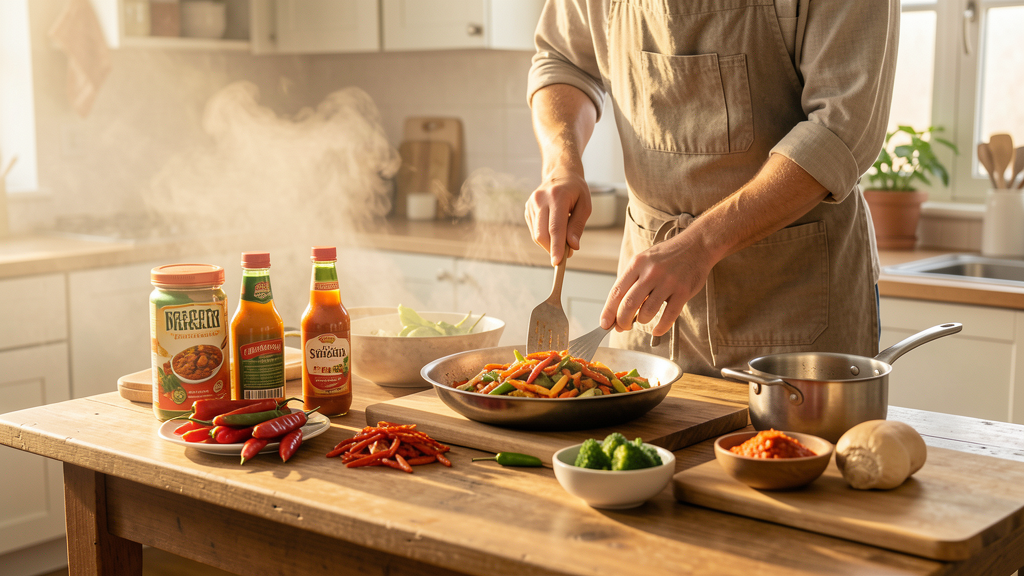
I have watched countless home cooks ruin a perfectly crisp bell pepper mix by pouring Sriracha into a smoking hot wok too early. You know the smell—that sharp, acrid odor of burnt garlic and caramelized sugar that clings to your kitchen vent for three days. The dilemma is real: if you add the sauce too late, it creates a soup at the bottom of the pan that refuses to stick to the vegetables. If you add it too early, the sugars scorch, turning your weeknight dinner into a bitter mess.
The correct timing for adding Sriracha to a stir-fry is not about a specific minute on the clock; it is about identifying the evaporation point of your vegetable moisture. The golden rule is to introduce Sriracha only after the high-heat searing is finished and the pan’s residual moisture has reduced to a glaze, specifically within the last 45 to 60 seconds of active cooking.
The Sugar Trap in Fermented Chili Sauces
To understand the timing, we have to look at what Sriracha actually is. Unlike a chili oil or a dry spice blend, Sriracha is a fermented paste with a significant sugar content, roughly 10 to 12 grams per tablespoon depending on the brand. That sugar is the vehicle for the heat, softening the vinegar's sharp edge and giving the sauce that characteristic viscosity.
When you are stir-frying over high heat, often exceeding 450°F (232°C) in a carbon steel wok, you are flirting with the caramelization point of sucrose. If you introduce the sauce while the vegetables are still releasing water, two negative things happen. First, the sugar dissolves into the excess water and slides off your protein or veggies into the bottom of the pan. Second, because water lowers the temperature of the pan, your instinct is to crank the heat higher. By the time that water evaporates, the dissolved sugar is left sitting on the bare metal, burning instantly.
I have tested this in the Hothoppers test kitchen repeatedly. The only way to get that sticky, restaurant-style coating is to add the Sriracha when the pan is hot but dry, just as the ingredients finish cooking.
The Geographic Origin and Substitution Strategy
Before we get deeper into the technique, we need to respect the roots of the condiment. The sauce we know as Sriracha originated in the coastal town of Si Racha, Thailand, in the 1930s. It was originally crafted by a local housewife named Thanom Chakkapak from a recipe involving chili peppers, vinegar, garlic, sugar, and salt, specifically to serve with the local seafood catch. The traditional chili used is often a variation of the phrik chi fa (finger chili) or bird's eye chili, which provides a sharp, upfront heat that differs significantly from the jalapeño-heavy American versions.
In 2026, sourcing authentic Thai Sriracha is easier, but if you cannot find it or you want to adjust the flavor profile, you must understand the substitutes.
- Sambal Oelek with a Pinch of Sugar: This is the raw material for Sriracha without the fermentation. It is uncooked, so the heat is fresher and greener. To mimic the Sriracha timing, mix a teaspoon of palm sugar into the sambal before adding it to the pan, otherwise, you miss the necessary gloss.
- Gochujang Thinned with Rice Vinegar: A Korean chili paste that offers a deeper, fermented umami punch. It is thicker than Sriracha, so you must thin it with vinegar to match the consistency required for the last-minute glaze technique.
The 45-Second Window of Opportunity
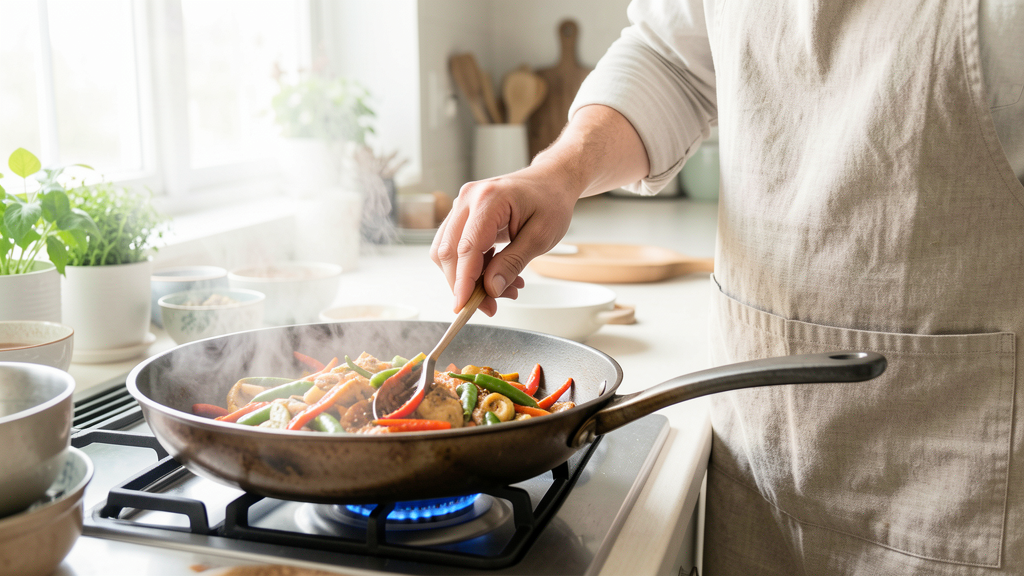
The practical application of this theory requires aggressive heat management. I recommend searing your aromatics and proteins first, followed by your hardest vegetables. Once the vegetables are crisp-tender and the liquid has mostly evaporated, you will see the oil beginning to shimmer again at the bottom of the pan. This is the signal.
Create a "well" in the center of the pan by pushing the ingredients up the sides of the wok. Pour your Sriracha directly into that hot pool of oil. You will hear an immediate, vigorous sizzle. Do not panic. This is the sugar melting and the vinegar flash-evaporating, which concentrates the flavor.
Count to forty-five seconds.
Toss the vegetables vigorously to coat them evenly. The sauce will darken slightly in color, shifting from a bright ketchup-red to a deeper, mahogany hue. This visual change indicates the Maillard reaction is occurring between the sauce sugars and the starches on your vegetables. At this exact moment, turn off the heat. The residual thermal energy in the pan will continue to cook the sauce onto the food without pushing it past the burning point. If you leave it on the heat for another ten seconds, you lose the nuance of the chili and get char.
Managing Viscosity Without Cornstarch
Many home cooks rely on a cornstarch slurry to force a stir-fry sauce to thicken. While effective, I find it muddies the vibrant red color of Sriracha and creates a gelatinous texture that feels artificial. The better approach is managing the reduction naturally. Because Sriracha is fermented, it contains pectin from the chili skins. When you hit it with high heat for that short burst, those pectins break down and tighten the emulsion.
If you find your sauce is still too runny, you likely overcrowded the pan, causing the temperature to drop too low and the vegetables to weep moisture. The fix isn't more cornstarch; it is cooking in smaller batches. However, if you are in a bind and need to save the glaze, remove the solid ingredients from the wok and let the Sriracha reduce alone in the pan for another fifteen seconds over high heat before tossing the vegetables back in. This separates the glaze reduction from the vegetable steaming, ensuring the sauce clings rather than pools.
There is a nuance here regarding the fat medium. If you are using a neutral oil with a high smoke point, like avocado or grapeseed, the Sriracha will integrate smoothly. If you attempt this technique with butter, the milk solids will brown faster than the Sriracha sugars, leading to a muddy flavor profile. For a richer finish, consider finishing with a chili-infused oil instead of cooking in butter. I have a method for infusing olive oil with chili flakes in under 15 minutes that works brilliantly as a finishing drizzle over the glazed stir-fry to add a layer of herbal grassiness that the fermented sauce lacks.
Balancing the Heat Distribution
One final issue often arises when adding the sauce late: uneven heat distribution. Because you are tossing and serving immediately, the spice does not have time to permeate the ingredients. You get bites that are overwhelmingly spicy and others that are bland. To solve this, you need to season your ingredients with heat before the glaze step.
I often rely on a dry heat application to build a base layer of spice before the wet sauce goes in. A light dusting of cayenne or a fresh minced chili tossed with the protein during the sear phase creates a uniform heat baseline. This allows the Sriracha to function primarily as a flavor and texture element—the gloss and the garlic kick—rather than the sole source of spiciness. If you are deciding between powders for this initial seasoning, check out my breakdown of fresh cayenne vs. chili powder: which one delivers better heat distribution in a scramble; the principles for scrambles apply equally to stir-fry proteins.
Mastering the Sriracha timing changes the entire texture of the dish. You stop eating steamed vegetables with spicy sauce at the bottom and start eating vegetables that wear their heat like a coat. It turns a Tuesday night staple into something that feels intentionally crafted, respecting the sugar, the fermentation, and the high heat.
Read next
The 12-Minute Chili Oil Trick That Saved My Tuesday Dinner
A gentle-heat method to extract complex chili flavors in minutes, transforming a bland weeknight roast into a restaurant-grade dish without the wait of cold infusion.
By Lucas Oliveira · 8 min read
Fresh Cayenne vs. Chili Powder: Solving the Heat Distribution Problem in Scrambled Eggs
Eliminate spicy landmines in your breakfast by understanding the physics of capsaicin dispersion and choosing the right form of heat for a consistent scramble.
By Lucas Oliveira · 7 min read