
The 12-Minute Chili Oil Trick That Saved My Tuesday Dinner
A gentle-heat method to extract complex chili flavors in minutes, transforming a bland weeknight roast into a restaurant-grade dish without the wait of cold infusion.


It was 6:45 PM on a Tuesday in March 2026. Rain was hammering the window of my apartment in Leeds, and my dinner guest was due in twenty minutes. I had taken a risk. Instead of my usual elaborate spice pastes, I had roasted a simple chicken with lemon and thyme, planning to rely on a finishing condiment to carry the flavor profile. The plan was a homemade chili crisp I had started on Sunday—a twenty-four-hour steep meant to extract the slow, smoky depths of the pepper.
I opened the jar. It smelled flat. The oil was pale, and the heat was muted. Cold infusion had failed me. I didn't have time to chop fresh aromatics, and deep-frying a garlic-chili paste from scratch would fill the kitchen with grease I didn't have time to ventilate. I needed a spicy garnish that tasted like it had been resting for weeks, but I needed it in the time it took to set the table.
This is the precise scenario where most cooks reach for a store-bought bottle of chili oil. I refuse to do that. The problem with commercial options is often a metallic aftertaste or an imbalance between the heat and the carrier oil. I needed something fresh, vibrant, and potent. I grabbed a small saucepan, a bottle of decent extra virgin olive oil, and my jar of dried Korean flakes. I was about to learn that speed doesn't have to sacrifice complexity if you understand how heat transfers flavor.
The Trap of the Deep Fry
My initial instinct was to treat this like making a traditional chili crisp. I turned the flame up, waiting for the oil to shimmer violently. If I had thrown the flakes in then, I would have ruined the dinner. High heat changes the chemical structure of dried chili rapidly. The sugars inside the fruit caramelize and then carbonize. You don't get a spicy, aromatic oil; you get a bitter, acrid sludge that coats the tongue in the worst way possible.
We see this same issue when roasting vegetables. High sugars and high heat without moisture lead to bitterness, a problem I’ve analyzed when discussing why do my roasted peppers turn bitter in the oven?. The same principle applies to oil. If you want to extract the capsaicin and the fruity esters, you need coaxing, not brute force.
I turned the dial down. The goal wasn't to cook the peppers; it was to wake them up. I needed to maintain a temperature just high enough to thin the viscosity of the olive oil and open the cellular structure of the flakes, but low enough to prevent scorching. This required constant, passive attention.
The Secret Weapon: Korean Gochugaru
For this rapid infusion, the choice of chili matters more than the oil. You need a flake with high surface area and a moisture content that isn't totally desiccated. I reached for Gochugaru, Korean red pepper flakes.
Unlike the rigid, seed-heavy Italian Calabrian chilies often found in pizza shakers, Gochugaru is typically sun-dried and retains a slight pliability. The flakes are uniform, with the seeds removed or minimal, meaning you are getting pure fruit flesh.
The Origin Story Gochugaru’s history is tied to the introduction of the chili pepper to Korea via Japan in the 16th century. However, the Koreans developed a unique drying process. The chilies are often dried in the shade or under netting to preserve their vibrant red color and prevent the breakdown of vitamins and sugars by direct UV rays. This results in a flake that is smoky, slightly sweet, and distinctly hot without being harsh. It is the backbone of Kimchi, but it works wonders in oil because the flesh releases flavor rapidly upon heating.
If You Can't Find Gochugaru I know specific ingredients can be a hurdle on a Tuesday night. If you don't have Gochugaru, do not use generic pizza red pepper flakes; they are too salty and seed-heavy.
- Aleppo Pepper: This is my top substitute. Hailing from Syria, these are coarsely ground and oil-cured with salt. They have a similar raisin-like sweetness and moderate heat that blooms quickly in warm oil.
- Smoked Paprika + Cayenne Mix: Mix one part smoked paprika with one part cayenne flakes. The paprika provides the body and color, while the cayenne provides the sharp spike the dish needs.
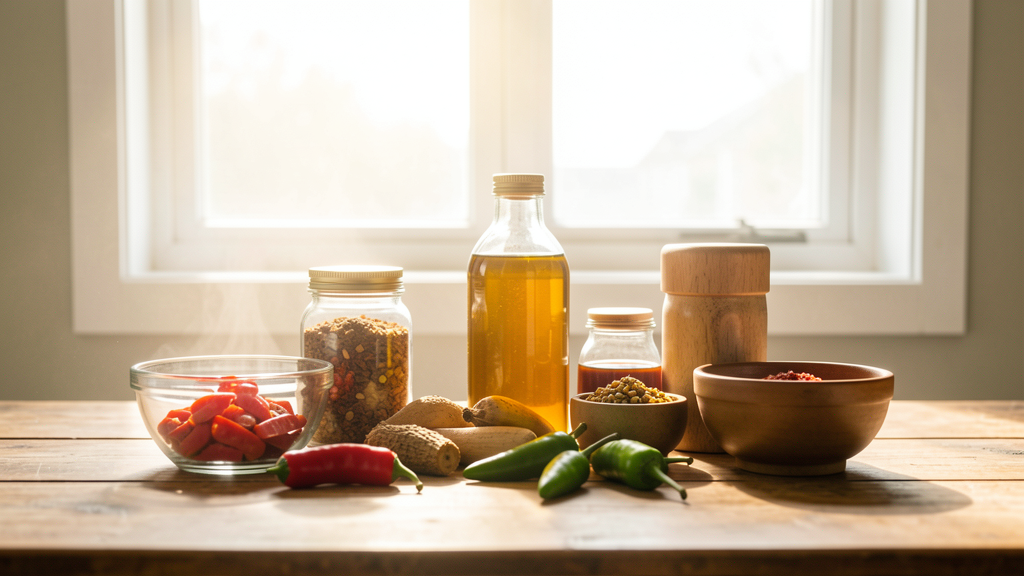
The Gentle-Heat Method
With my ingredients selected, I executed the method that would save the meal. This isn't a recipe; it is a technique of observation.
I poured half a cup of extra virgin olive oil into the small saucepan. I turned the heat to medium-low. You are looking for a "shiver" in the oil, not a roar. Small bubbles should rise lazily from the bottom of the pan, but the surface should be calm. If the oil is smoking, you have failed.
Once the oil was warm—about 150°F—I poured in a quarter cup of Gochugaru flakes.
Immediately, the oil turned a brilliant sunset orange. I kept the pan on the heat for exactly one minute. I watched the bubbles increase slightly as the moisture in the flakes escaped. I stirred gently with a wooden spoon, ensuring every flake was submerged.
Then, I did the hardest part: I turned the heat off.
The real infusion happens in the ten minutes after the cooking stops. The residual heat of the oil continues to extract the flavor from the pepper without the risk of burning it. I let it sit on the cooling stove. The aroma shifted from raw pepper to a savory, toasted nuttiness. It filled the kitchen, masking the smell of the rain outside.
When I poured it into a serving bowl, the consistency was perfect. The oil had a velvety mouthfeel, and the flakes had rehydrated just enough to be chewy, not crunchy. It was ready.
Why This Works for Weeknight Cooking
The beauty of this method lies in its versatility. Since that Tuesday, I have used this technique as a base for various quick fixes. Sometimes, I add a bruised garlic clove to the cold oil before heating, removing it before adding the flakes to impart a subtle backend savory note. Other times, I finish it with a drop of soy sauce right at the end for an umami punch.
However, you must manage your expectations regarding the chili's texture. Unlike a cold infusion, which keeps flakes crisp, or a deep fry, which makes them hard, this gentle heat leaves the flakes slightly soft. They settle into the oil. For drizzling over chicken, tossing with roasted potatoes, or even dressing a simple green salad, this texture is actually superior. It feels more like a sauce than a garnish.
It also solves the "heat without flavor" problem. Many home cooks, when rushing, just dump hot sauce on the plate. That adds vinegar and acid, which might clash with your dish. This oil adds pure, unadulterated chili flavor and fat. It rounds out the sharp edges of a weeknight meal, making it taste cooked with intent rather than haste.
The Shelf-Life Trade-Off
There is one honest caveat I must share. Because we are using fresh ingredients and a gentle heat method that may introduce trace moisture and particulate matter into the oil, this is not a pantry staple that lasts for six months.
Moisture is the enemy of oil preservation. While deep-frying drives all water out, leaving a crispy, shelf-stable product, this gentle method leaves the biology of the pepper slightly more intact. Bacteria love water, and botulism loves low-acid, anaerobic environments (like a jar of oil).
For the best experience, and to be safe, consume this oil within 5 to 7 days. Keep it in the refrigerator if you aren't going to use it all in one sitting; the oil will solidify slightly, but a few seconds in the microwave will return it to liquid gold. If you want something that lasts a year, you have to commit to the full fermentation process, which I detail in making your first fermented pepper mash: the 3-step air-lock method.
But for a quick dinner? Five days is plenty of time.
Beyond the Heat
When my guest arrived, the chicken was resting. I spooned the vibrant oil over the crispy skin. The contrast was immediate—the savory, lemon-thyme chicken met the smoky, sweet heat of the Gochugaru oil. It tasted complex. It tasted like I had spent the afternoon simmering the sauce, rather than panicking over a stove for twelve minutes.
The lesson here isn't just about chili oil. It is about understanding that flavor extraction is a game of variables. We often think time is the only currency that buys depth of flavor. In reality, temperature control and ingredient quality are often more valuable currencies than time. By respecting the delicate nature of the chili and using the oil's latent energy, we can cheat the clock.
For those who find aggressive chili preparations overwhelming, this method is also a gateway. Using a milder chili or adjusting the ratio can create a condiment that adds body without the fear of overwhelming the palate. You can explore more on this with 5 mild chilies that add body without burning your throat.
Dinner was saved not by a complex technique, but by surrendering to the limitations of the time I had and working within them. The result was a condiment that has now become a staple in my weeknight-heat arsenal, not because it is fast, but because it tastes honest.
Read next
Why Do My Roasted Peppers Turn Bitter in the Oven?
Stop ruining your soups with acrid, ash-tasting peppers by understanding the specific carbonization point of the skin versus the flesh.
By Lucas Oliveira · 7 min read

Which Mild Peppers Add the Most Body Without the Heat?
Discover five specific thick-fleshed pepper varieties that deliver substantial texture and culinary volume to your dishes without scorching your palate.
By Mariana Souza · 6 min read