
The Smokiness Trojan Horse: How Smoked Paprika Saved Taco Tuesday
Learn how a strategic switch from hot sauce to oak-smoked paprika bypassed my family's heat defenses and retrained their palates for real spice.

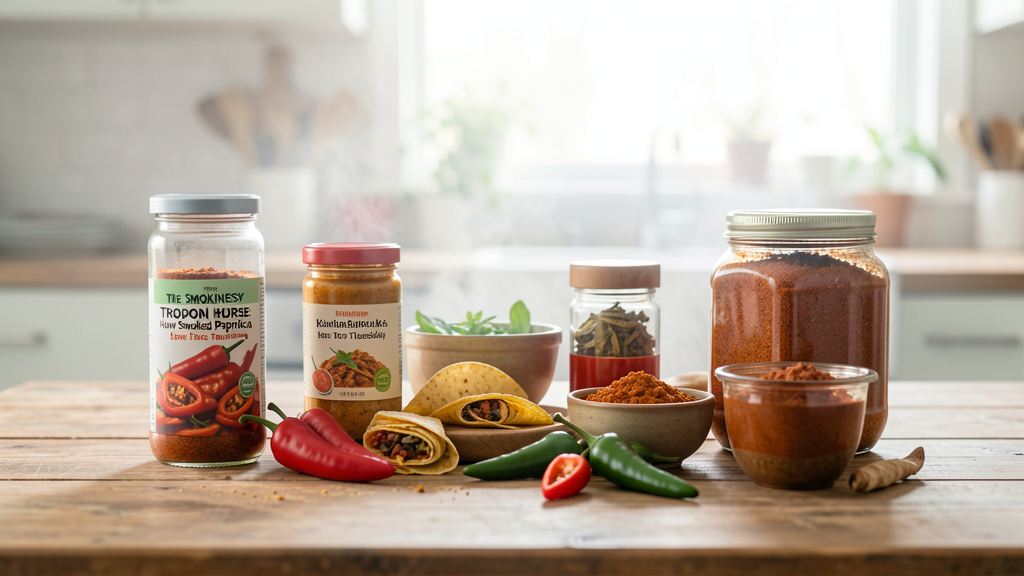
March 3rd, 2026, was supposed to be a celebration of flavor in my house. I had prepped a birria-style beef taco filling, reducing the chuck roast in a broth of dried guajillos and anchos for six hours. The aroma was intoxicating—earthy, complex, and deeply savory. But when I sat my wife, Mara, and our seven-year-old, Leo, down at the table, the mood shifted. Mara spotted the floating seeds of the arbol peppers I had toasted for the garnish, and she immediately reached for the milk. Leo, seeing his mother’s hesitation, pushed his plate away.
I had failed again. In my quest to bring the Global Heat philosophy to my own dinner table, I was hitting the wall of sensory resistance. They weren't rejecting the taste; they were preemptively rejecting the pain. I realized that if I wanted to feed them the chilies I loved, I had to stop attacking their pain receptors and start seducing their noses. I needed a Trojan horse.
The Tuesday Night Standoff
For years, my approach to cooking for the family was a bifurcated system: one mild batch for them, one nuclear batch for me. It was inefficient, doubling the prep work and the cleanup. I was tired of washing two separate sets of pans. The problem wasn't that they disliked complex flavors; it was that their brains had wired "chili" to "emergency."
I decided to abandon the Scoville scale for a month. Instead of chasing the burn of fresh cayenne or the sharp vinegar sting of Tabasco, I pivoted to a spice that offers the idea of fire without the actual violence: Pimentón de la Vera.
This Spanish paprika is made from peppers that are dried over oak wood fires for two weeks, then stone-ground into a fine, crimson dust. Originating in the La Vera region of Extremadura, the process imparts a profound smokiness that mimics the savory depth of grilled meat and charred vegetables. Since true Pimentón de la Vera can sometimes be pricey or hard to find in standard suburban supermarkets, I keep two locally available backups in my pantry for this strategy: standard sweet paprika mixed with a drop of liquid smoke, or chipotle powder (which is smoked jalapeño) used sparingly. The goal isn't the heat, but the shadow of heat.
Why Smokiness Outpaces Burn
The logic behind this shift is rooted in how we perceive flavor. When the brain encounters capsaicin—the chemical compound responsible for the sensation of heat—it triggers TRPV1 receptors, the same alarms that go off when you touch a hot stove. For a spice-averse eater, this is a biological stop sign.
Smokiness, however, triggers olfactory receptors associated with comfort and safety. We are evolutionarily programmed to associate smoke with cooked food, fire, and sustenance. By flooding the taco filling with smokiness, I could bypass the "danger" alerts and access the "delicious" channels. I wasn't hiding the spice; I was changing the context in which it was received.
I grounded this in a technique I usually reserve for finishing oils. I often discuss how to infuse olive oil with chili flakes to extract flavor gently, but for this experiment, I needed the spice to be part of the matrix of the meat itself, not a finishing gloss.
The Paprika Protocol
The following Tuesday, I tried again. I ditched the complex birria and went for a classic ground beef taco—familiar territory for the family. This was the test case. If I could get them to eat this, I could scale up.
The Base: I browned 1.5 lbs of 80/20 ground beef. I drained the excess fat but left about two tablespoons in the skillet. This fat was the carrier.
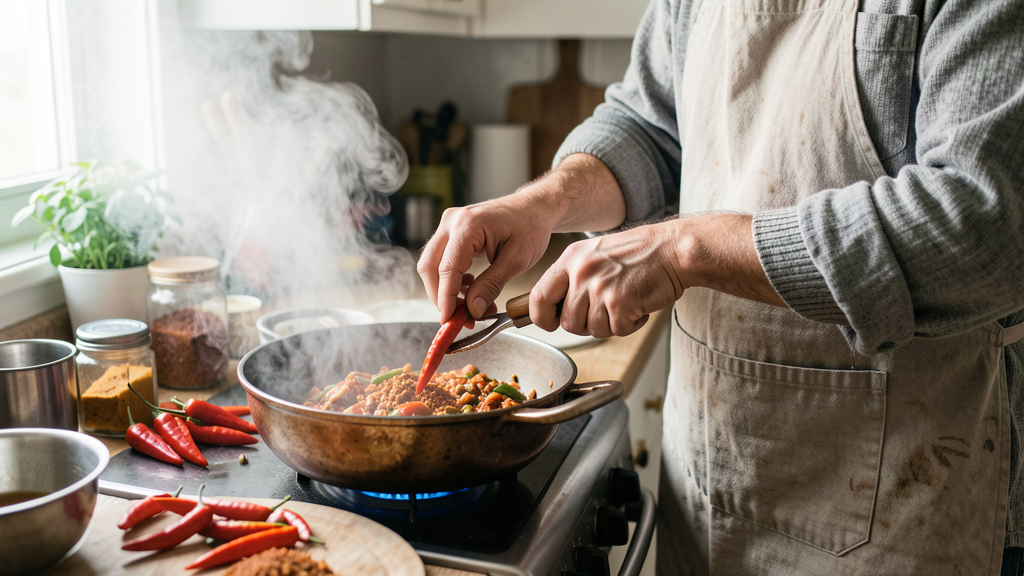
The Bloom: Instead of adding water or broth immediately, I lowered the heat. I added two tablespoons of Pimentón de la Vera (sweet, not picante), one tablespoon of cumin, and one teaspoon of garlic powder directly into the hot fat. I let it sizzle for forty-five seconds. This "blooming" releases the fat-soluble compounds. The kitchen filled with a campfire aroma, but it didn't smell spicy.
The Integration: I added a can of diced tomatoes and a quarter cup of water. I let it simmer until the liquid reduced and coated the meat in a dark, mahogany glaze.
The Presentation: Here was the critical moment. Usually, I serve hot sauce on the side. This time, the table had no hot sauce. There were no jalapeño slices. There were only lime wedges and cilantro. The visual cues of "danger" were removed.
Mara took the first bite. She chewed. She looked at me. She took another bite. "It’s really savory," she said. "Did you put bacon in this?"
"No," I said. "Just paprika."
Leo, seeing his mom eat without crying, took a bite. He ate two tacos without asking for milk. I watched him scrape the meat off the tortilla. The smokiness provided a "weight" to the flavor that made the beef taste more substantial, like it had been grilled for hours. I had tricked their palates into enjoying a complex spice profile by using the backdoor of umami.
Managing the Bitterness Trap
I want to be honest about a trade-off here: Smoked paprika has a tipping point. Because it is dried and ground, it can become bitter and dusty if you use too much or if you burn it during the blooming phase. It lacks the acidity that fresh chilies or hot sauces provide, which can make a dish taste a bit flat or "muddy" if you aren't careful.
To counter this, I finished the tacos with a heavy squeeze of fresh lime juice just before serving. The acid cuts through the rich smokiness and brightens the whole plate. Without that acid, the tacos taste like an ashtray.
This technique is distinct from the raw heat delivery of fresh peppers. When I look at the debate of fresh cayenne vs. chili powder in other recipes, the distinction usually comes down to heat distribution. But here, the distribution is about flavor density. The powder coats every grain of meat evenly, ensuring there are no "hot spots" that might scare off a tentative eater.
What Happened After Dinner
The success of the paprika tacos wasn't just that they ate dinner. It was that the baseline for their palate shifted. Two weeks later, I made a stir-fry. I knew the timing had to be precise. I referenced my notes on what is the correct timing for adding Sriracha to ensure the sauce didn't separate, but I also incorporated a teaspoon of the smoked paprika into the sauce base.
Leo tasted it and said, "I like the spicy part."
"It's not spicy, buddy," I corrected him. "It's smoky."
"I know," he said. "I like the spicy part."
He had mislabeled the sensation of smokiness as "spiciness," and for the first time, he viewed that label as a positive attribute. He was voluntarily categorizing a complex flavor profile as a desirable trait.
Since then, we have moved past the placebo phase. I am now introducing actual mild heat into the mix, mixing the Pimentón de la Vera with a small amount of ancho chili powder which has a gentle warmth. Because they trust the "smoky" flavor profile, they are less resistant to the low-level hum of actual capsaicin.
This wasn't about tricking them forever. It was about deconditioning a fear response. By using the comfort of smoke to mask the intrusion of spice, I have successfully merged the "dad dinner" and the "family dinner" into a single meal. I haven't reached the point where we are eating Naga Jolokias together, but for a weeknight-heat strategy, this smokiness bridge has been the most effective tool in my arsenal.
Read next
The 12-Minute Chili Oil Trick That Saved My Tuesday Dinner
A gentle-heat method to extract complex chili flavors in minutes, transforming a bland weeknight roast into a restaurant-grade dish without the wait of cold infusion.
By Lucas Oliveira · 8 min read
Fresh Cayenne vs. Chili Powder: Solving the Heat Distribution Problem in Scrambled Eggs
Eliminate spicy landmines in your breakfast by understanding the physics of capsaicin dispersion and choosing the right form of heat for a consistent scramble.
By Lucas Oliveira · 7 min read