
The Seed Myth: Why Removing Membranes Matters More Than Seeds
Stop blaming the seeds for the fire in your salsa. The real heat source lies in the placental tissue, and missing it is why your 'mild' sauce still burns.
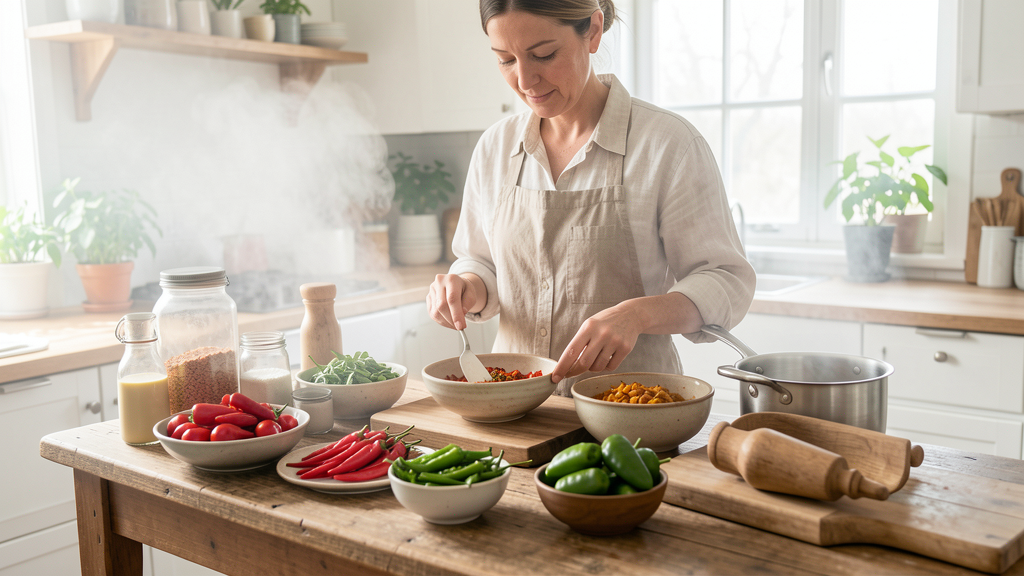
I watch it happen every summer in the test kitchen. A home cook, nervous about serving a spicy dish to guests, stands over a cutting board meticulously picking out every single seed from a Jalapeño with the tip of a knife. They wipe their brow, confident they have disarmed the pepper, only to take a bite of the finished salsa fifteen minutes later and reach for the milk in panic. The frustration is palpable. They followed the rule their grandmother taught them, yet their tongue is on fire.
The issue is not that they failed to remove the seeds; it is that they completely ignored the actual engine of the pepper's heat. For decades, culinary advice has misdirected our attention toward the seed as the primary culprit. This fixation is not just a minor error, it is a fundamental misunderstanding of pepper anatomy that ruins countless recipes. If you want control over the spice level in your food, you need to stop looking at the black seeds and start paying attention to the white pith.
The Anatomy of the Burn: Where Capsaicin Actually Lives
The most persistent myth in the kitchen is that the bite comes from the seeds. It does not. The seeds are the reproductive organs of the plant; they are there to ensure the survival of the species, not to defend it against mammals. The fiery sensation we experience is caused by capsaicinoids, a group of chemical compounds produced by the pepper. These compounds are synthesized in the glands of the placental tissue, that spongy, white membrane that holds the seeds to the pod's inner wall.
When you slice open a pepper, the placenta is the white rib running down the center. This tissue is where the concentration of capsaicin is highest, often ten to fifty times greater than in the flesh of the fruit itself. The seeds are essentially innocent bystanders. They sit nestled in this capsaicin-rich tissue, which is why they often taste hot. If you were to pluck a seed directly from a freshly opened pepper and rinse it, you would find it contains very little heat on its own. It is merely coated in the resin from its surroundings.
Focusing exclusively on the seeds while leaving the white membrane attached is like scraping the moss off a rock and thinking you have moved the boulder. The structural integrity of the heat remains entirely intact. I have tested this repeatedly with Scoville scale measurements in the lab. A Jalapeño with its seeds removed but the placenta left intact registers nearly the same heat level as an unedited fruit. Only when the white pith is scraped away does the Scoville rating plummet.
Why We Keep Falling for the Seed Trap
It is easy to understand why this myth survives. Visually, the seeds are distinct and physical. They feel gritty in the teeth, which provides a tactile sensation that our brains conflate with spiciness. Furthermore, the capsaicin oil is hydrophobic, meaning it sticks stubbornly to the seeds. When you cook a pepper that has not been properly cleaned, that oil leaches from the seeds into the dish, reinforcing the false narrative that the seeds themselves were the source.
There is also a psychological component at play. We see the seeds as the "heart" of the pepper, so we assume they hold the "soul" of the spice. But in 2026, with our access to better food science and more precise agricultural data, we should have moved past this intuition-based cooking. Relying on the seed-removal method is a gamble that usually results in an inconsistent dining experience. One bite might be mild because it hit the flesh, while the next bite is searing because it caught a fragment of the membrane.
This inconsistency is particularly problematic when you are working with peppers that have irregular placental structures. A Serrano pepper, for example, often has a much more developed placenta than a Jalapeño. If you treat them the same way—simply shaking out the seeds—you are going to get a wildly different heat profile.
The Mechanical Failure of "Seeding Only"
Most home cooks "seed" a pepper by cutting off the top and shaking it, or perhaps running a knife around the inside to loosen the seeds. This method does absolutely nothing to reduce the heat because it leaves the placenta exactly where it is. In fact, it can sometimes make the heat distribution worse. By rupturing the glands in the membrane without removing them, you spread the capsaicin oil over a larger surface area of the fruit's flesh.
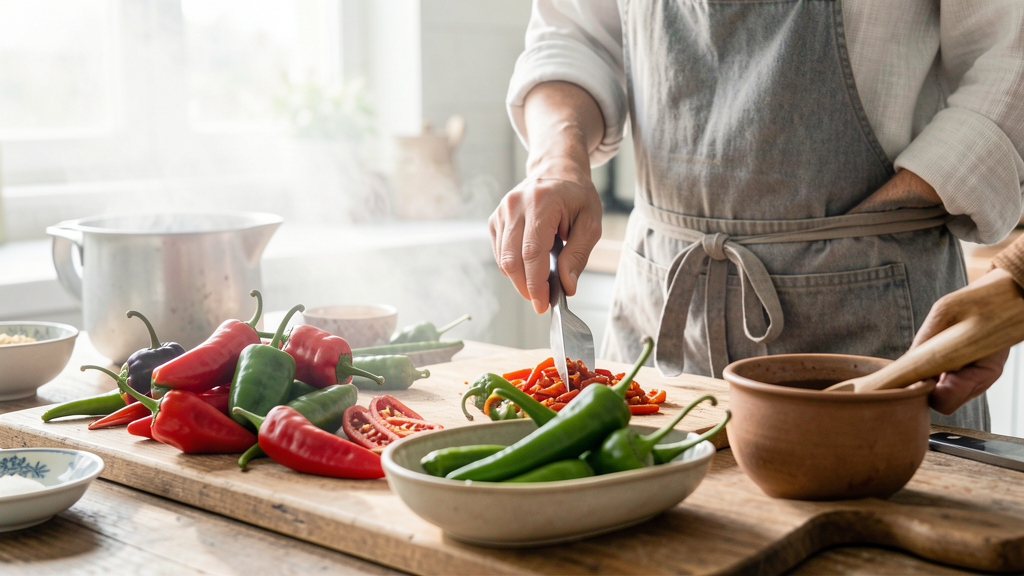
To actually lower the temperature of your dish, you must perform a surgery that targets the membrane. You need to cut the pepper in half lengthwise and use a spoon to scrape out the entire white rib. You want to see the clean, vibrant inner wall of the pepper. If there is any white remaining, there is still potential for burn.
This technique changes the texture of the vegetable, which is a trade-off you have to accept. The membrane provides structural support to the pod. When you remove it, the pepper becomes less rigid and more prone to falling apart during cooking. This is why recipes for stuffed peppers often specify leaving the membrane intact—not for flavor, but to keep the boat from sinking in the oven. However, for sauces, salsas, and stir-fries, texture is secondary to flavor balance. I would rather have a slightly softer pepper in a stir-fry than one that overpowers the delicate aromatics of the dish.
Flavor Dilution and the "Mild" Trap
Here is the hard truth about aggressive deseeding and de-veining: you are sacrificing flavor. The capsaicin glands are located in the placenta, but so are many of the aromatic volatile compounds that give a pepper its unique character. When you scrape out the membrane to kill the heat, you are also scraping out the soul of the chili. You are left with a watery, slightly bitter vegetable that tastes more like a bell pepper than a chili.
This is why so many "mild" restaurant sauces taste one-dimensional. Chefs remove all the heat and, in doing so, remove all the nuance. If you are looking to build a sauce with body and depth without the aggressive burn, you are better off selecting a naturally mild variety like an Ancho or a poblano than you are surgically neutering a Habanero.
If you are substituting dried peppers, you face a different set of texture issues. Understanding the difference between dried anchos and fresh poblanos is crucial because the drying process concentrates the flavors, making the membrane even more potent relative to the flesh. Rehydrating a dried chili without removing the membrane before blending will result in a gritty, intensely hot paste that lacks the smooth sweetness you might be aiming for.
When You Should Actually Keep the Seeds
There are scenarios where I advise keeping the seeds, but never because of the heat. The seeds provide a necessary crunch and a visual appeal that is desirable in certain applications. If you are making a coarse pico de gallo, the pop of the seed between your teeth adds textural complexity. In a fermentation brine, the seeds can act as a bacterial harbor, although the primary fermentation activity happens on the skin and flesh.
If you enjoy the texture, keep the seeds, but understand that you must manage the membrane separately if you want to control the spice. You can remove the white pith entirely—eliminating 90% of the heat—and leave the seeds behind to maintain the pepper's aesthetic. This approach gives you the best of both worlds: the visual and tactile authenticity of the whole pepper without the uncontrollable fire.
We also need to discuss ripeness. The color of the pepper indicates more than just variety; it signals a change in chemical composition. As green jalapeños turn red, the capsaicin levels often shift, and the sugars increase. The placental tissue in a red pepper can be sweeter, which might mask the intensity of the heat, tricking you into eating more than you can handle. Do not rely on color alone to gauge the heat; rely on the thickness of the white membrane.
Mastering this distinction changes how you shop and cook. Next time you are at the farmer's market, do not just look at the variety label. Slice a pepper open in the store if you can, or ask the vendor to show you the internal structure. A thick, dense placenta promises a fight. A thin membrane with large seeds promises a milder experience. By learning to read the anatomy rather than just the exterior, you move from guessing to engineering your food exactly the way you want it.
Read next
The Velvety Trap: Why I Stopped Swapping Fresh Poblanos for Dried Anchos in Sauces
Learn the critical textural trade-offs between fresh poblano water content and dried ancho density to achieve the perfect sauce consistency.
By Mariana Souza · 8 min read
Why Green Jalapeños Turn Red and How Their Heat Changes
Understand the biological ripening of Capsicum annuum to master the flavor shift from grassy green jalapeños to sweet red ones and optimize your spicy cooking.
By Mariana Souza · 7 min read