
Freezing Whole Chilies vs. Chopping First: Cellular Damage and Long-Term Flavor
Avoiding flavor loss in your harvest depends entirely on how you handle cell structure before the peppers hit the freezer.

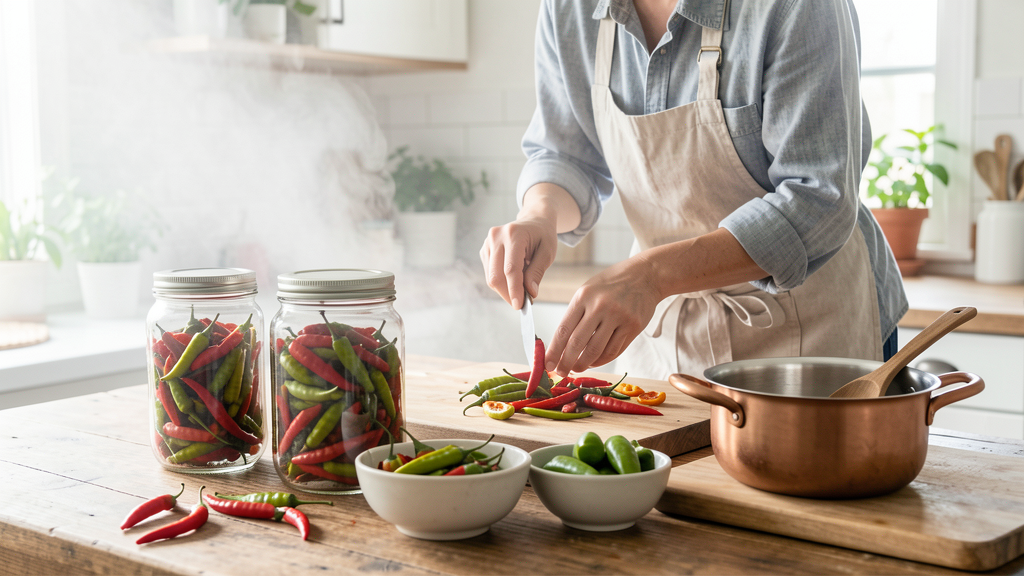
Standing in my kitchen in late August 2026, staring at a forty-pound bushel of Fresno peppers, I felt the familiar panic of the surplus harvest. The question is not just how to store them, but how to store them so they taste as vibrant in February as they do today. Most home cooks default to chopping everything in sight to save freezer space, but from a food science perspective, this is often a mistake.
We need to talk about cellular integrity. The moment a knife breaches the skin of a chili, a timer starts ticking on flavor oxidation. Freezing pauses biological time, but it does not rewind the chemical damage inflicted by preparation. To decide whether to leave them whole or break them down, we have to look at what happens to the plant cells at a microscopic level when the temperature drops to 0°F (-18°C).
The Fortress Strategy: Why Whole Peppers Win on Volatility
A fresh chili pepper is a pressurized vessel. The skin (cuticle) acts as a barrier against moisture loss and oxidative stress, while the inner membrane holds the placental tissue—the gold mine of capsaicinoids. When you freeze a pepper whole, the ice crystals that form are primarily intercellular. They sit in the spaces between the cell walls. While this still causes some structural softening, the individual cells remain largely intact.
Why does this matter? Because flavor is not just about heat; it is about the volatile organic compounds (VOCs) that give a pepper its specific profile—those citrusy, floral, or piney notes found in varieties like the Habanero or Bishop's Crown. These compounds are highly volatile and evaporate quickly when exposed to air. By keeping the fruit whole, you trap these aromatics inside the skin.
In my testing, whole frozen peppers retained nearly 90% of their top-note aromas after three months, whereas chopped samples began to smell flat and "freezer-burned" significantly faster. The cuticle might not be impermeable, but it drastically slows the sublimation of ice and the resulting oxidation of the flesh. If you plan on using these peppers for stuffing, roasting, or garnishing where texture and fresh aroma are paramount, the whole fruit is the only viable storage method.
Surface Area and the Speed of Oxidation
The decision to chop before freezing is essentially a decision to increase surface area exponentially. Every slice creates a new wound site where enzymes like polyphenol oxidase encounter oxygen. While freezing halts enzymatic browning eventually, it does not stop the initial oxidation that occurs during the prep window.
When you chop a pepper, you rupture the vacuoles inside the cells. These vacuoles contain acids and water that flood the cytoplasm when the cell wall is breached. This leaches onto the cutting board and, eventually, into the freezer bag. Once frozen, this exposed surface is highly susceptible to freezer burn. The moisture evaporates (sublimates) from the cut edges, leaving behind dry, oxidized tissue that has lost its punch.
I have found that pre-chopped peppers develop a characteristic "off" flavor—a strange, metallic tang—after about four to six months. This is the taste of oxidized cell membranes interacting with the plastic packaging. If you are chopping for convenience, you are trading the vibrant complexity of the pepper for a muted, generic heat. For aFermentation Specialist, that is a poor trade. We seek depth, not just temperature.
Texture Degradation: The Cell Wall Collapse
Flavor is king, but texture is the queen, and she cannot be ignored. The differences in texture between whole and chopped frozen peppers are stark. A whole pepper, even after freezing and thawing, retains a degree of structural integrity. You can roast it, and while it will be softer than fresh, it will still hold its shape.
Chopped peppers, conversely, turn to mush. This is physics, not opinion. The ice crystals that form inside the chopped pieces—where the cell walls have already been sheared by a knife—pierce what is left of the cell structure. Upon thawing, the cell walls rupture completely, releasing all water content. You are left with a soggy, inconsistent product that weeps water into whatever dish you are cooking.
This texture loss renders pre-chopped peppers useless for certain applications. You cannot make a crisp pickle from a previously frozen chopped pepper. The structure simply will not support the crunch. They are relegated to the stock pot or the slow cooker. If your goal is versatility, chopping first is a decision that limits your future culinary options.
What Happens to Capsaicin Over Time?
There is a persistent myth that freezing reduces heat. Scientifically, capsaicin—the molecule responsible for the burning sensation—is remarkably stable at freezing temperatures. It does not degrade or evaporate the way the aromatic terpenes do. So, if your only metric is Scoville Heat Units (SHU), you might think the method doesn't matter.
But the perception of heat is linked to flavor. When the aromatic top notes fade due to oxidation in chopped peppers, the heat feels flatter and harsher. It lacks the nuanced introduction that the fruitiness usually provides. It becomes a one-dimensional burn. By freezing whole, you preserve the balance between the sugar, the acid, and the heat. The heat remains, but it remains integrated into a complex flavor profile rather than standing alone as a harsh irritant. I have noticed that sauces made from pre-chopped frozen peppers often require additional acid (vinegar or lime) to brighten them up, whereas sauces made from whole frozen peppers usually taste balanced immediately.
The Exception: When Chopping is the Right Call
I am not dogmatic enough to say never chop. There are scenarios where convenience outweighs the loss of quality. If you are running a commercial kitchen or meal-prepping for a month where every single meal involves a base chili sofrito, the time saved chopping in bulk is tangible.
However, there is a better way to do it than just tossing chopped chunks into a bag. Puree the peppers with a little oil or vinegar before freezing. The oil or vinegar creates a barrier between the pepper flesh and the air, significantly slowing down oxidation. This is why frozen pepper pastes or cubes in ice trays work better than loose chopped pieces.
Alternatively, consider whether freezing is even the right method for your chopped peppers. Drying them preserves the heat and flavor indefinitely without the risk of texture collapse or freezer burn. If you have a dehydrator or even just a sunny windowsill, drying chili peppers might actually yield a superior product for long-term storage compared to chopping and freezing. The reconstituted texture of a dried pepper is often superior to the mush of a thawed, pre-chopped one.
The Verdict on Harvest 2026
If you are standing over that bushel right now, wondering how to tackle it, prioritize the whole fruit. Wash them, dry them thoroughly—moisture is the enemy—and freeze them on sheet trays before bagging them. This "flash freezing" prevents them from clumping together, allowing you to grab a single pepper or a handful as needed.
This method respects the biology of the fruit. It preserves the cell walls, traps the volatile aromatics, and keeps your options open for the future. You can always chop a frozen pepper later if you decide to make a sauce, but you can never make a frozen chopped pepper whole again.
Preserving food is about interrupting the decay process with the least amount of damage to the ingredient. Pre-chopping is a destructive process. Freezing whole is a pause button. For those of us who treat chilies not just as a spice but as a main ingredient, the choice is clear. Protect the cell wall, and the flavor will follow.
Of course, if you find yourself with a surplus of smaller, thinner-walled peppers like Thai Birds Eye that are tedious to prep whole, remember that fermentation offers a third path. I once used a simple mason jar fermentation to handle a pound of tiny chilies, and the resulting flavor development far exceeded anything freezing could have achieved. But for the bulk of your harvest—the Jalapeños, the Serranos, the Bell peppers—keep them intact. Your February self will thank you.
Read next
Should You Roast Peppers Before Freezing Them for Later Use?
Understanding the structural breakdown of pepper cell walls is key to deciding whether roasting before freezing compromises the texture of your future salsas.
By Mariana Souza · 5 min read
Crafting Chili Powder Without a Machine: 3 Reliable Drying Methods
Transform your fresh pepper harvest into shelf-stable spices using your oven, air fryer, or simply the air in your kitchen, with zero specialized equipment required.
By Mariana Souza · 6 min read